Make marginal gains work for you

Marginal-gains-sketch

If you can make small increases in performance in lots of different areas, you’ll make a huge difference in overall terms. This principal of ‘marginal gains’, coined by Sir Dave Brailsford, the leader of the Sky Pro Cycling team in the UK, has been used to great success in sports as well as other areas of life and business.

Think about a target such as getting up earlier in order to achieve more. Break it down into the things that affect sleep and make a plan around changing your actions and behaviour in these areas, e.g. don’t drink caffeine after a certain time in the evening, don’t take your devices to the bedroom with you, switching them off so you are not disturbed and create a time that you stick to religiously as your absolute maximum for being in bed and asleep.

The results on a task like this can be huge. It may sound a bit dull, especially with an example such as this, but the outputs from sports performance are incredible and if you apply this principle to your own work or life it can have a huge impact.
Doing the hard things

Some things in life are just really hard.

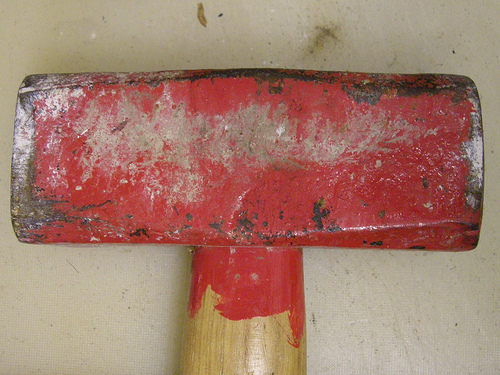
hammer

Sometimes decisions have to be made that do not feel good and can cause a great deal of stress and strain for all those involved. These decisions can also have far-reaching implications and can change the whole course of your life and those you love and care for.

They might be decisions around work and careers. They might be decisions about where you live, who your friends are or how close to your friends you will be. They might also be around money, such as making a decision to make a life-changing purchase or commit to buying a property or a similarly huge spend.

Whatever the predicament that you find yourself in, you just have to do something about moving forwards from it and getting away from the darkness of the place you feel today. However bad today feels for you, whatever it is that you have to decide or deliver upon, you must remember a couple of things:

  • The sun will come up tomorrow, whatever decision you make today
  • There are many, many people in the world who have a lot more to deal with every day than you do and some reflection on this will do much more good than harm
  • The sooner you take some kind of positive action, however difficult it may seem, the sooner you can move on with your new plan and begin to execute it. Execution is what it’s all about.

Business books – Do The Work, Steven Pressfield

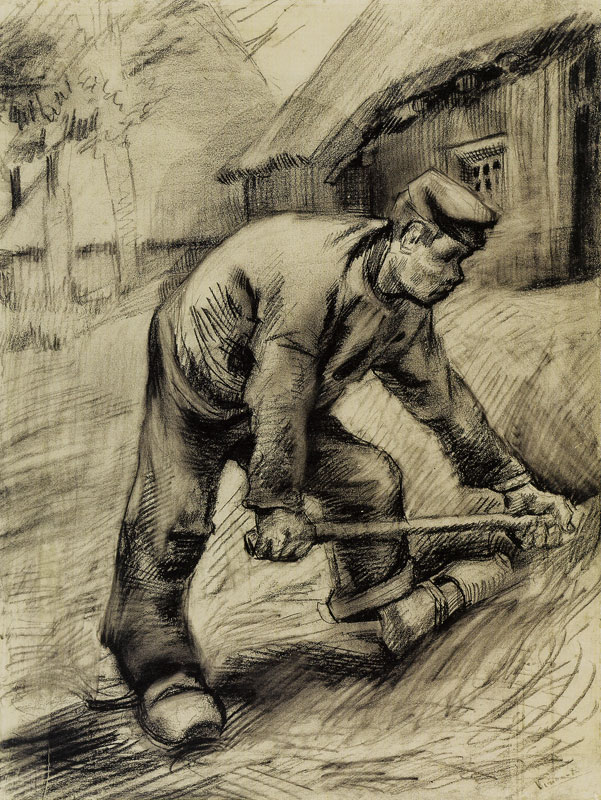
Van Gogh, Man With Hoe

This book is a real shot in the arm when you are down in the dumps or lacking the will to get things done. It tackles resistance and rightly positions it as the main thing that’s stopping all of us from achieving our goals, whatever they are.

Pressfield is a writer by trade so a lot of what he says in this book is based on how you would approach the task of writing a book yourself, but this shouldn’t put you off picking it up if you’re not a writer. There is some real gold in here and you can use the book like a coach in your ear, guiding you through a project of any kind.

A couple of points from the book that ring around my head a lot of the time:

  • Start a project backwards – begin at the finish. Decide on what you’re trying to create and then deliver and execute on your plans
  • When you overcome initial resistance, good things start to happen. Momentum appears, as does habit and rhythm.
  • You’re not finished until you actually ship your project, whatever it is. Always ship. Get it out there and face the music!

Highly recommend getting your hands on a copy. You won’t regret it.

The basics of any business

banana skin

Running a business of any kind is very difficult. Around every corner are potential banana skins and you need to be keeping an eye on everything at all times. Sales, finances, new business development, marketing, the lot. But there are three things that you have to remember at all times:

1 – The purpose of being in business is to make a profit. Nothing else really matters.

2 – Making sales is what business is all about. However good you are at the other elements, if you can’t sell you need to find a way to change that and fast.

3 – Sales is the foundation of any business but cash management keeps you in business. Manage your money in the right way and you’ll never have any problems.

Get into good habits

If you can get into some good habits, they will provide you with a really solid foundation in everything you do.

manage_your_finances

I have some really bad ones and I think we all have them, somewhere. My worst is biting my fingernails. I do it ALL THE TIME and it causes great annoyance to both me and my wife. I stopped for a while with some NLP-style help a long time ago but I got back into it very quickly. Soooo annoying!

There is a phrase that I have heard quoted a few times – “habits over good intentions, every time” – and this is what I aim for. It takes work to make a habit stick, but if you can keep at it and it will pay you back over time.

My latest reading in 2016

Shoot The Messenger, Shane Kuhn – follow up to Kill Your Boss, fast moving fiction involving a hitman on the run.

The Establishment, Owen Jones – dissects the make-up of the British ruling classes in great detail.

Essays of Warren Buffett, Lawrence A. Cunningham – extracts of the famous annual letters to Berkshire Hathaway shareholders.

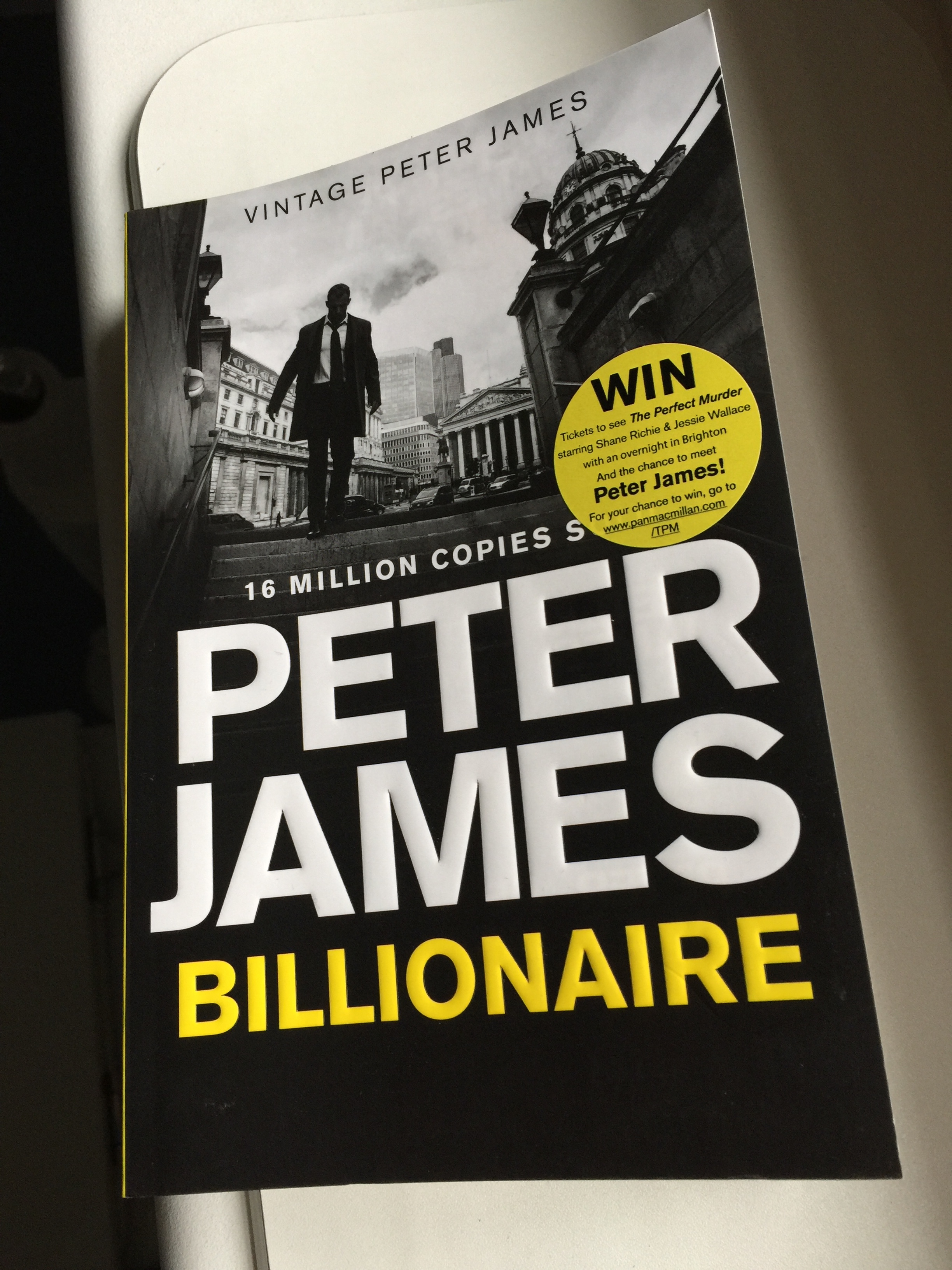
Billionaire, Peter James – a stockbroker gets greedy and pays the price.

billionaire peter james

Turning training from hard labour into progress and positivity

I’m into my bike training for the two rides i have coming up – 50 miles in Wales, April 23rd and 80 miles in Cambridgeshire, June 5th – and it is nothing short of hard labour at the moment.

granny on bike

I’m not a natural on the bike. Too tall, very long in the body and an ideal wind break. I also lack the big hamstring and glute muscles required to grind it out up the hills and push the pace on the flats. I’m also not very good at handling cold weather and facing up to the elements of this time of year where we live.

But I’m doing what I can to get the work done. I’m doing some short distances as often as the schedule will allow and building up to the first event in April. I’m learning more about how to get down low on the handlebars and slice more easily through the wind (of which there is LOADS) and I’ve done a lot of work in the gym on improving my leg strength – there is still a long way to go but it’s getting better slowly.

I enjoy being on the bike and the sense of freedom that it gives but I have come to the conclusion that it’s not a sport I’m ever going to love. I’m happy enough to train for the events coming up this year but long distance rides will be extremely limited in the future.

Having the bike for short sprint triathlons and some leisure riding will be enough for me and I would always rather be running – a lot less kit required, no fear of mechanicals or punctures and, for me, a whole lot more enjoyment. My knees will pack up at some point soon but I will keep them strong through the gym work and then deal with the pain as it comes on over time.

Always be working

Glengarry Glen Ross was a film made back in 1992 based on a famous Broadway play. One of its most famous quotes is ‘A.B.C. – always be closing’ and Alec Baldwin’s character delivers the line as a tough guy salesman brought in to drag a poorly performing team up to scratch. He’s laying down the law in this scene and it’s worth a watch if you haven’t seen it before.

always be closing

I was reminded of this line the other day when reading an interview and it got me thinking about a line that is my own version of the one above:

ALWAYS BE WORKING

It is crucially important to me to always be delivering or executing on a project and adding value to whatever I am working on. It might be growing and developing my network, it might be a piece of client work, it might be a bike ride, a run or a gym session or something else completely different, but this phrase is focussed on never forgetting that it is a state in which good things happen

I am not very good at having too much downtime. I like to have a rest every now and again as we all need to do, but it can kill you if it goes on too long and turns into inactivity. When I remember to ALWAYS BE WORKING, I’m very quick to get out of this state and get back at it.

[If you need any help with your resume/CV, please check out my other site https://realjobsearchinsider.wordpress.com/]

Be ready for the call

empty seats in a hall

With a bit of luck in your life, at some point in time you will get the call to the big leagues. And when that call comes, you need to be ready for it.

The work will be hard and it will feel like it is never going to be done but it will be the thing that makes you. When this kind of lucky break appears you have got to do something with it and, if you have discipline and focus, you will be prepared.

Manage yourself the right way through preparation and repetition of lots of things in your life, such as your health and diet, getting enough exercise and sleep, etc. and you will be able to take full advantage of the opportunity.

Repeat the simple things to the point that they become automatic and the call will not be a surprise – you’ll be ready and waiting.

[If you need any help with your resume/CV, please check out my other site https://realjobsearchinsider.wordpress.com/]

Your CV – check, check and check again

My latest post from LinkedIn:

sherlock holmes

Many CVs are full of errors and this is something that is easy to fix. Check your document, get others to proofread it, then recheck it to make sure there are no mistakes. If it’s a straight choice between two applications for a role and one of the CVs has no spelling errors, who do you think gets the invitation to interview? It can really be that simple.

Make sure your address details, telephone number (mobile only) and email address are clear and correct at the top of each page. If you’re in the process of relocating to a new area, it can also help to add to any covering letter or email what your plans are, otherwise it can cause real confusion and lead your application to the trash.

Check all of your spelling, grammar, punctuation and layout on the document. Think of the reader and what they are going to think of the way your document has been prepared – it really does make a difference when you are looking at lots of these every day.

And be sure to check your facts, statistics and data. Don’t be caught out by an employer doing their standard due diligence on you as a candidate and identifying a glaring exaggeration of sales figures or project details. If they decide to interview you, which would be unlikely if you make this kind of mistake, they are sure to ask you to justify your version of the facts so avoid this potential banana skin.

[If you need any help with your resume/CV, please check out my other site https://realjobsearchinsider.wordpress.com/]

Get over your fears in 2016

explosion

It doesn’t matter what it is that you’re afraid of and it doesn’t matter how you do it, but if you can make 2016 the year that you get past your fears, you’ll have a fantastic year.

So, what’s holding you back? Ask yourself this question when you’re facing something tough and listen hard to your answers.  I’m sure when you do this you’ll realise that your answers are nothing much beyond excuses, really and sound quite hollow in the open air.

Keep doing this whenever you feel anxious or are struggling to overcome something you find hard or difficult. You’ll see things much more clearly and start to break through these self-imposed barriers.

Try it and see what it can do for you.

The thinking of Tom Peters

“The vitality of our network will determine our professional fate.” From The Little Big Things: 163 Ways To Pursue Excellence (2010)

tom peters

The work of Tom Peters is well worth getting to know if you are interested in learning how to improve your work life and, if you are a manager, get the most from your team.

Mr Peters learned the basics in the US Navy, collecting his postgrad qualifications following active service in the Vietnam War. He also spent some time in the White House in the 70’s as a senior advisor to the Nixon administration. But the experience for which he is most renowned is his time with McKinsey & Co in the late 70’s/early 80’s – with his co-writer Bob Waterman he wrote ‘In Search of Excellence’, one of the most popular books on organisational effectiveness there has ever been.

Nowadays, Mr Peters writes and speaks extensively on getting the most out of yourself and those around you in the workplace. The quote above is taken from one of my favourite books and it’s one I highly recommend for some true pearls of wisdom on how to achieve excellence at every level and in everything you do.

It’s all about being helpful, caring about people, doing a great job no matter what and about delivering excellence in the face of whatever you are confronted by. Reading this book also makes you immediately get off your backside and take some action which is one of the main reasons I love reading his work so much.

If you’re someone that loves to learn and finds that taking action is the best way to effect some kind of change, make sure you add this one to your shopping list.

One door closes, others open

I’ve been working on quite a tricky project for a few months now and it is coming to an end very soon. I’ve enjoyed the work and am pleased with my own outcomes and learnings from it, but it has meant a lot of time away from home and a lot of travel.

It’s going to be great over the next few days to take stock of how far I’ve come and how much work there is in front of me and Katherine as a team as we build our business, St John, from here on.

Other doors always open when you make space and I’m looking forward to this space being filled very soon.

Ian Mountford is a global recruitment expert and strategy coach providing motivation and guidance to entrepreneurs, wannabe or fully-fledged. He draws from his own experience of building businesses from the ground up and spending many years helping clients to consistently achieve their goals and aspirations. Ian works with clients face-to-face and internationally.

Cash matters

cash

Some thoughts about saving and investments that have crossed my mind over the last couple of weeks after doing quite a bit of reading on the subject:

Be cautious: Think through any kind of decision that will have an effect on your everyday life and cash balance as if your whole life depended on it. Do all of your research and read up on the basic facts as you can find them, then get further truly independent and impartial advice, and then make your decision. Yes, at some point you just have to pull the trigger and many of us can really struggle in this area, too, but research can truly pay off when making big decisions and spending money. The consequences of not researching are there for all to see – ‘great’ investments oversold and the life savings of many returning much less than they should and fees swallowing up huge percentages over the years.

Timing: What is a sensible period of time holding off on making a decision – researching – and how much research should you do? You could be reducing the time it takes to reach your targets and increasing the value of your earnings via compounding of interest if you delay too long, so get your research done to a point where you feel comfortable and then make a start. If you haven’t got a system for saving money weekly or monthly where cash is automatically transferred to a savings account, however small, you must start that without further delay. Stop what you’re doing now and get this done – it will literally take 15 minutes and will be the beginning of your investment journey.

Regular reviews, but not too regular: The days where you could leave an investment and just wait for it to mature with that huge cheque landing on your doormat are over. Investments need regular review and if you need to take profits or alter your strategy to reflect activity in the economy, get it done to keep yourself on course.

Ian Mountford is a global recruitment expert and strategy coach providing motivation and guidance to entrepreneurs, wannabe or fully-fledged. He draws from his own experience of building businesses from the ground up and spending many years helping clients to consistently achieve their goals and aspirations. Ian works with clients face-to-face and internationally.


What’s your next challenge?

hill-climbing-technique-1-630x420 (1)

The daily grind can really get you down. Commuting followed by the same old faces in the office and the same old problems in your job leads us into the ‘living for the weekend’ mentality. Add some bigger personal goals to your life – challenges to your everyday existence of any kind, physical or mental – and use them to drive your life forwards and basically do more, live more.

My challenges are quite often related to sport. I have a challenge in April next year to ride 50 miles on my bike on a very hilly course in a race in West Wales. Now, I’m not a full-on rider so it’s going to take a lot of work to get fit enough for this. And I’m also not all that strong in the legs so hills just stop me stone dead, so the work is going to have to be really hard to make sure I can finish this thing.

The point I’m making here is that this bigger challenge – bigger than the everyday stuff we all have to do – is getting me focussed and making sure I train hard and put in the work to make the ride a success. It might also lead me to do more racing and get my legs strong enough to go up some bigger hills. Maybe even the French Alps one day. Who knows?

Set yourself a challenge and see where it takes you. Until you try, you’re never going to really know what you’re capable of. Use it to give you focus and create some energy and drive to achieve.

Ian Mountford is a global recruitment expert and strategy coach providing motivation and guidance to entrepreneurs, wannabe or fully-fledged. He draws from his own experience of building businesses from the ground up and spending many years helping clients to consistently achieve their goals and aspirations. Ian works with clients face-to-face and internationally.

What makes you who you are?

Day dreaming - Pretty Caucasian business woman with hand on chin

Thinking about your influences and the things that have shaped you through your life is something that I’m a big fan of.

Where do you spend your most of your time? What kind of books or magazines do you read? What sports are you interested in and how do you keep fit and exercise? Do you enjoy cleaning and polishing your classic car at the weekend or do you always go for a long run? These few things are the tip of the iceberg and I realise that our childhood and upbringing plays a massive part in what we do as we get older but it can pay off to pay attention to this stuff.

If you have an awareness of the things that make you tick this should drive you towards spending more time doing them. They are pointing at your passions in life and this is where the best work of our lives comes from. This is the place where work doesn’t feel like work and we tend to be at our happiest when we are doing these things. Pay attention and see where it can take you.

Ian Mountford is a global recruitment expert and strategy coach providing motivation and guidance to entrepreneurs, wannabe or fully-fledged. He draws from his own experience of building businesses from the ground up and spending many years helping clients to consistently achieve their goals and aspirations. Ian works with clients face-to-face and internationally.

Find your groove

golf shot

The need for a groove – a regular routine – is very strong with me. I feel like I’m floating along with very little control, like a balloon let loose into the air, when I don’t have this structure and this doesn’t make me feel good.

It’s also very easy to lose basic skills through not using or practising techniques that you have learned. Golf is a great example of this – take a lesson and everything feels good for a while but once you stop working on your game everything you have heard slowly floats out of your mind.

I’m on the road a lot at the moment and finding structure and routine very hard to find but I have to find it. This time is important time for me to feel good and if I need to make changes in order for this groove to be rediscovered, I need to do it as quickly as I can. Like, today!

Keep it simple and focus on the goals. This will help to realise the importance of the routine and the practice and the peace and quiet or whatever it is that gets you in your groove. If you don’t, you’ll end up with lower patience and tolerance levels, a restless and busy mind, a lack of regularity in lots of areas in your life and you’ll not feel happy. Not good and definitely not a place where you can be your best.

Ian Mountford is a global recruitment expert and strategy coach providing motivation and guidance to entrepreneurs, wannabe or fully-fledged. He draws from his own experience of building businesses from the ground up and spending many years helping clients to consistently achieve their goals and aspirations. Ian works with clients face-to-face and internationally.

The psychology of greatness

I read quite a bit about golf when I have the time and Bob Rotella is one of my favourites. He is a psychologist who has helped some of the greats and his teachings are, in essence, very simple. He talks a lot about the psychology of greatness and his study over the years has been about what makes champions in all sports, not just golf. I also think his teachings can be applied in all areas, not just golf. Below are just a few and I hope you can see the crossover:

  • Champions are ordinary people doing extraordinary things
  • Play to be great everyday
  • If you get yourself in the right frame of mind you can find out how good you can be
  • Learn to love your game and not wish you had someone else’s
  • Talent means zero. It has way more to do with what you bring to it than just natural ability
  • Examine your doubts in your own abilities and then lose them
  • Know how to play when not in the zone
  • Cultivate trust – be able to hit shots under pressure with a clear head

Checklist – things to ask and consider when you’re looking for a new job

Here’s a list of things that are worth finding out and thinking about as you go through the decision making process of deciding to take a new job or stay where you are. Got any additional ones? Please add them in the comments.

  1. What’s the travel time and is it a decent commute.
  2. Are there good facilities for staff in the office, eg kitchens, rest areas, car parking.
  3. Is the salary competitive with similar roles at other local/national companies.
  4. Is there a good benefits package – health care cover, pension provision, day off for your birthday, free snacks, etc.
  5. Is there a solid training and development programme in place or a culture of learning in the company.
  6. Do you get to work on any special projects outside of your role, or can you volunteer for additional work on projects that interest you.
  7. Is there a glass ceiling or is there room to grow.
  8. What are the skill levels and the experience of others in the team.
  9. Is there a matrix management structure or is it a bureaucratic framework.
  10. What’s the culture like – fun, whacky, structured, quiet, formal, etc.
  11. What was the interview process like – really good reflection of the company in most cases.
  12. How did the company communicate with you through the offer process – again, another great indicator to take note of.