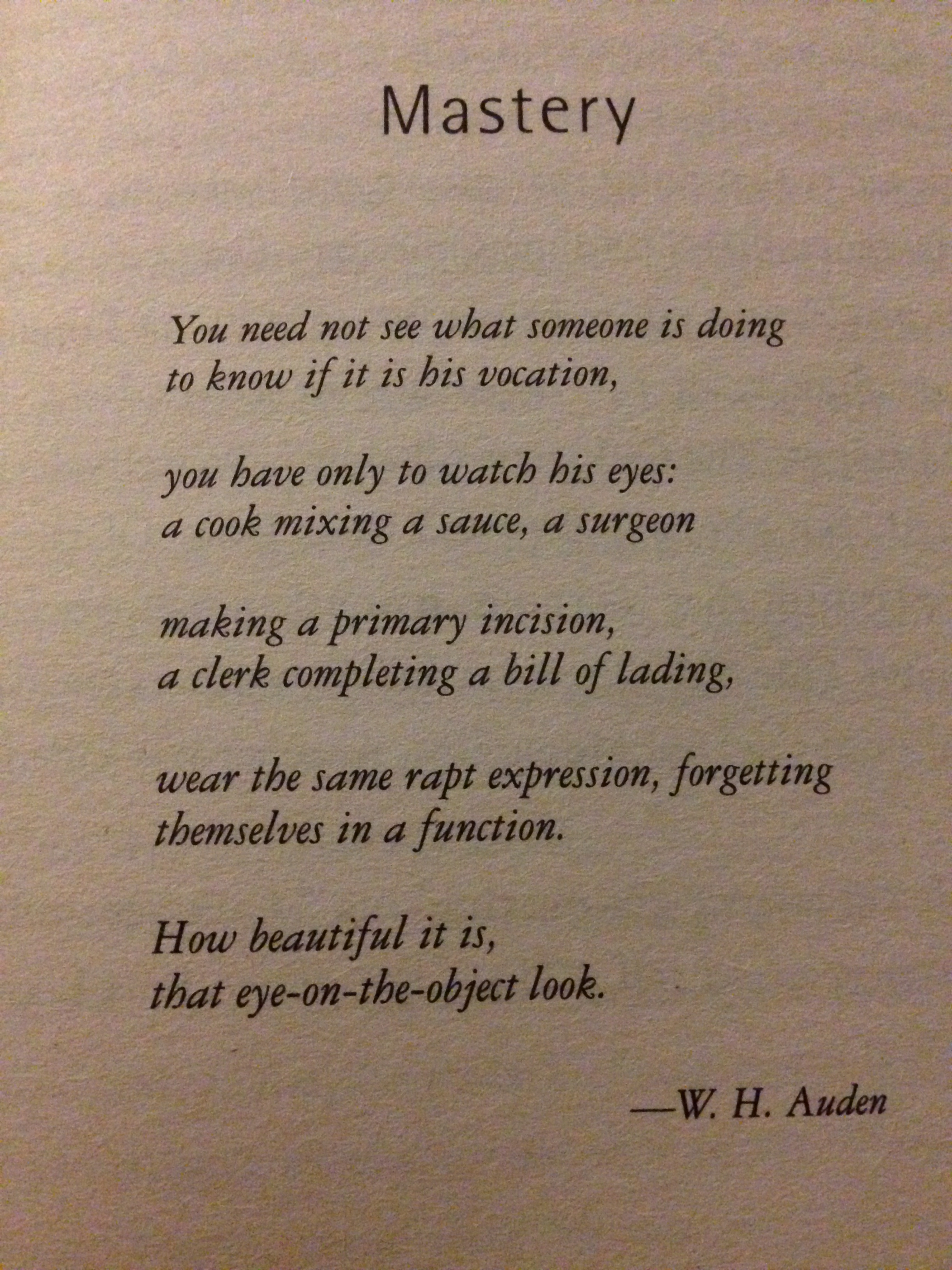
Have been reading Robert Greene’s ‘Mastery’. It’s a very interesting and insightful book. Uses a system to categorise the steps involved in becoming a master of anything.
Definitely goes onto the ‘highly recommended’ list.
I’ve noticed in the last few days my brain is racing between a huge range of thoughts.
I haven’t done much differently in terms of daily routines. Not drinking more coffee than normal, and drinking less alcohol than I have in recent times.
The ability to focus on achieving one task without three others popping into my head has escaped me.
I’m taking note of the things that pop up in a notebook. It’s all mundane, normal stuff. Nothing groundbreaking.
Maybe it’s a sign that I have a lot of things to do in life in general (this is a long list), or maybe my brain has started to fire in different ways.
It could be the start of some new pathways, too. There could be a shiny thought among the mundane ones somewhere on this journey.
Keeping myself in listening mode right now is important. There will be a house move in the near future, and some travel towards the end of the year. A change in seasons is upon us as the sun comes out and the temparature rises.
Time to tune in and listen to what’s going on in my brain.
There has been a lot of upheaval in the last few weeks. This could be my brain’s way of resetting.
It’s easy to whinge and moan about not having enough.
Money, time, friends, skills. These things don’t turn up by accident.
A plan will get you on the path to making good things happen.
They are never set in stone. They can change as life takes you in different directions. Reviewing plans is a part of the process of staying on the right track.
But you’ve gotta have one. Avoid it and the weeds will overtake the flowers in your metaphorical garden.
Your direction and purpose will be unclear.
Spend a few minutes working out what you’re going to do today and write it down. This is where it starts.
William Bridges talks about transitions. I was given his book by a mentor 25 years ago. At the time, I was fumbling my way out of university and into a career, constantly complianing at how long it was taking to pan out.
The book was ‘The Way of Transition’. I have kept it close ever since. It contains clarity at times of stress, confusion or change.
When I first read the book, I remember telling friends I felt like I was in a washing machine – soak, suds and then spin. And the spin cycle was going on for a long, long time.
Sleep wasn’t good. My head was playing tricks on me. The basics of life were out of sync.
I learned that this is the neutral zone. The ‘waste land’ Bridges talks of where there is no life, no growth. Just vast, empty space.
It’s the place we go through when life happens and change is forced upon us.
It’s a harsh landscape. There are no signposts or pathways. A bit of gravel here and there if you’re lucky.
Not much is clear in any direction, and nothing you can do will change this.
All you can do is wait. Things will eventually offer themselves up. Like Dorothy in the Wizard of Oz, you’ll find your way back to Kansas, but it’s not the same Kansas you left.
“So the thing to do when working on a motorcycle, as is in any other task, is to cultivate the peace of mind which does not separate one’s self from one’s surroundings. When that is done successfully, then everything else follows naturally. Peace of mind produces right values, right values produce right thoughts. Right thoughts produce right actions and right actions produce work which will be a material reflection for others to see of the serenity at the centre of it all.”
Listened to an interview with the band and Howard Stern last night.
These guys are workers. The play their music hard, day after day. They hit the rehearsal room and work.
The things we see – the shows and the energy – are the peak of their powers. Day to day, these guys are trying new things. Making mistakes, ploughing through new stuff and finding the gold.
Flea said that when they go on stage for any show, they go at it as if there’s an axe murderer waiting for them the minute the show is over who’s going to kill them all.
They burn the boats. They crucify on stage, killing it. The crowd receives the sacrifice of their energy.
Anything you want to do well could benefit from the same approach.
Don’t complain that things aren’t working out for you unless you attack them in the same way.
It helps to know the things you’re not so good at. The things you should work on. The things you know you should deal with.
They have a tendency to get ‘lost in the fog.’ Piles of paper cover those lists of once important and urgent tasks you wanted to get done but never got around to.
It may not feel comfortable to write these things down. Seeing your weaknesses, your blind-spots, on the page can be challenging.
It’s in this type of awareness that opportunities for growth live.
They could be learning opportunities. Skills you could brush-up on, or new ways to pass the time.
But they be complete attitude shifts, or changes to ways of working. The recognition that you talk too much at certain times could, for example, open up a new line of thinking and action.
The benefits on a daily basis may not be immediately visible or measurable. Be consistent and they soon will be.
Think of preparation as your personal success code. When you’re prepared, fear dissolves because there are no surprises. It’s like having a roadmap for a road trip. You know exactly where you’re going.
Here’s what happens. Preparation builds confidence, and confidence always beats fear. Consider a job interview. Research the company and practice your answers and walk in calm and collected. The unprepared candidate? They’re sweating bullets.
Doubt keeps us from discovering our true potential. It whispers ‘what if you fail?’ But when you’re prepared, that voice gets quieter. You’ve done the work, so you know you can handle whatever comes.
Be methodical about your process. Create checklists, run through scenarios, expect challenges. This isn’t overthinking. It’s strategic preparation that transforms anxiety into assurance.
Always be prepared. It’s your fastest path from fear to confidence.
Here’s a list I made and stuck on my wall when I was in my 20’s, a long time ago. I think it came from a book but I couldn’t tell you which one:
Buy what you want, instead of what others say you want.
Think for yourself, instead of being told what to think.
Recognise that there are many things more important than money.
Fulfil the demands of work without being controlled by it.
Live in a way that is self-determined and original.
Talk less, think more.
Know what you want.
Not cost, but value.
Buy one, chuck one.
Organise your environment.
They still stand the test of time.
Some of these statements wash over us easily as hogwash when we’re in the eye of the storm, fighting daily fires, and getting mad at social media posts.
When we sit back, take a few deep breaths, and see the wood for the trees, the sense in these words hits hard.