Tag Archives: training

The Talent Code – well worth a read

DNA-editing-

Every now and again I come across a book and as soon as I’m no more than a handful of pages in, I know it’s going to be a really useful one for a long time to come. The Talent Code by Daniel Coyle is one of those books and I would highly recommend it for Coyle’s work on this very grey area and deep research into talent hotbeds and methods of practice that debunk the myth that talent is simply something you are born with.

The top performers in a variety of sectors, not just sport or music, across the world are using a “neurological mechanism” to aid their practice where “certain patterns of targeted practice build skill”. This creates a neural insulator called myelin which wraps itself around electrical circuits travelling from your brain as you practice and the more you practice, the more myelin insulation you create. As the myelin increases in thickness and wraps itself around the circuits building speed and skill, the better you perform in the long run. Apologies for the amateur science lesson but hopefully you get the point.

Coyle takes us on a journey around the world visiting talent hotbeds – a tennis academy in Russia and Brazilian football schools among others – and analyses the coaching methods employed to build the maximum amount of myelin, even in cases where the coaches themselves don’t even know why they are getting such amazing results with their pupils. His insights are easy to understand and the book contains very few scientific references with the ‘code’ broken down into three key parts:

  • Deep practice – pushing your training to the edges of your ability and learning from the process of making mistakes, over and over again.
  • Ignition – a breakthrough winner from South Korea on the LPGA golf tour led to a huge uptake of the game in the country and a stack of high performers around the world.
  • Master coaching – those who use deep practice and ignition to get the incredible results share some very similar traits and methods.

Get hold of a copy if you’re even a tiny bit interested in talent and understanding how people reach levels of performance that seem a long way away from the common man. Lots of great learning points and a book I’ll be referring back to for years.

Ian Mountford is a Strategy Coach providing motivation and guidance to entrepreneurs, wannabe or fully-fledged. He draws from his own experience of building businesses from the ground up and spending many years helping clients to consistently achieve their goals and aspirations. Ian works with clients face-to-face and internationally.
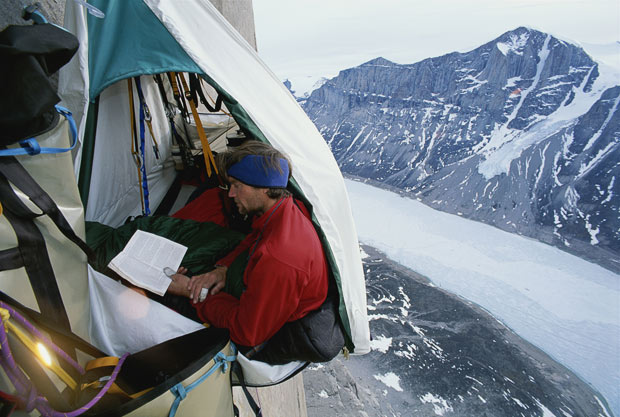
How do you respond to discomfort and hardship?

Cliff-camping-read_1906690i

Discomfort and hardship are a state of mind in the society we live in today. We generally lead very protected lives in the western world – comfortable, secure and with a full stomach most of the time – and don’t have much of a sense of what going without things is really like. There are many in the world that do suffer from extremes of poverty and very poor living conditions, lacking basics of food and shelter, but this is not about them. This is about people who get angry and annoyed if their wifi isn’t 100% efficient or complain at the length of the queue in their favourite coffee shop.

How you respond to any discomfort or hardship in your life can be definitive as you develop. If you learn your craft, whatever that might be, in a tough school, the chances are you’re going to have paid attention and worked hard to master whatever the craft you were learning as the consequences of not doing so would be unbearable. The best examples of this tend to be the armed forces colleges around the world producing elite fighters but there are also examples in all areas, such as musicians, businessmen and women and engineers and so on. The overriding factor is that high percentages of these people at the top of their game had to overcome some obstacles that would have put off many people much earlier in the learning process and it was this ability to overcome challenges, whether physical, mental or both, that got them to the top.

When there were no cars and public transport was minimal and inconsistent at best, people thought nothing of walking for miles and miles to do everyday things. And in the years before this, people ate what they killed and if they didn’t kill, they didn’t eat. I heard a story about someone the other day who sleeps outdoors at least one night a month to ensure they don’t lose their ability to handle cold weather. The mental fortitude that this kind of thing breeds has a habit of spreading into other areas of your life and I would recommend thinking about your own life and looking for ways to encourage some discomfort or hardship and see what gains you can achieve as a result.

Ian Mountford is a Strategy Coach providing motivation and guidance to entrepreneurs, wannabe or fully-fledged. He draws from his own experience of building businesses from the ground up and spending many years helping clients to consistently achieve their goals and aspirations. Ian works with clients face-to-face and internationally.

Can 4 kilos and 8mph make you a champion?

I found an article I had taken from the sports section of a UK newspaper back in 2007 written by Brad Gilbert, coach of tennis player Andy Murray at the time. This was way before he was the champion that he has become and Gilbert was explaining what it was going to take to make Murray No1 in the world rankings.

andy murray serving

Gilbert had focussed on these two metrics – bodyweight and speed of serve – because he felt this was what would get the maximum possible game out of the player. He also felt that if he achieved these two metrics, the ranking would take care of itself. He didn’t want to talk about numbers or results or become obsessed on hitting a particular spot – he just wanted to make his player the best he could be.

murray wimbledon

This approach can be a really strong one to take in order to stay focussed. Fix the things you can change and don’t worry about the stuff you can’t. Work on the things that make you better and get the most out of yourself every day. The bigger things will take care of themselves over time. Yes, you need to be dedicated, work hard, be determined, a fighter, etc and all these things that lead to making winners, but also try taking this approach using specifics and see if it can work for you.

Ian Mountford is a Strategy Coach providing motivation and guidance to entrepreneurs, wannabe or fully-fledged. He draws from his own experience of building businesses from the ground up and spending many years helping clients to consistently achieve their goals and aspirations. Ian works with clients face-to-face and internationally.

We are watching the development of a lost generation

Unemployment in any age group is tough enough, but when the largest growth in unemployment is in the under 25’s across the EU it highlights a really dark period ahead of us. The high cost of higher education and general scarcity of both jobs and publicly-funded training options for those leaving school at 16 are proving to be a dangerous combination.

So what are these young people going to do? If nation-states are unable or unwilling to help and employers cannot give any real opportunities, where are the answers coming from? I find this question very tough to answer and think that we should all focus a bit more on this as an issue that will get bigger and bigger as the years go by.

There are organisations out there who are willing to help but their own funding lifelines have also been cut in this economy. I did some voluntary work with a project helping the homeless in London years ago but they are long gone now and ended when the money ran out. Even in the third sector it seems that there are the have’s – big cancer charities, Oxfam, etc – and the have-not’s – smaller local supporters of the underprivileged in their own communities. The big get bigger and the smaller fade into the background, fighting for survival.

Everything tends to work in cycles and the things I mention here are part of a very obvious, yet negative, one. Being aware of it is one thing, but I’d also like to know the plan for change and action of a positive nature. A generation with poor levels of education and little work experience of any value is of no use to anyone.