I picked up a book on Sunday that had been on the shelf for a few months. I had started to read it but something else took my attention. I put it to one side.
I couldn’t remember much about the contents. It was a book about writing by a writer so there wasn’t much of a mystery to solve.
I read it for a few minutes on Sunday night. It wasn’t pulling me in. I picked up again last night for another go, but the reason I put it down instantly became clear.
I didn’t like it. I couldn’t get on with it. The way it’s written, the types of examples the author uses (all about himself), even the font size left me feeling empty.
Something I find time to do because I enjoy it wasn’t enjoyable.
The minute this happens, it’s worth stepping away. The book will be removed from the shelves, taken to the charity store. I don’t want it anywhere in the house.
Life’s to short to spend time doing something for fun, like reading, using your precious free time, and not enjoying it.
Put it down, find another book from the pile, and take a different journey.
Who you see, the tools you use, where you work, the position of your desk in your home, the stuff you experience every day – it all has to support you in the daily journey towards achievement of your goals.
How can you improve your environment along these lines?
Think in terms of people, process, and technology.
Do you need to be around a more supportive crew on a daily basis?
Is your bedtime routine making it hard for you to get up on time, and therefore start the day on time, and in a good frame of mind?
Do you use software tools that help you day-to-day, or are you the kind of person who signs up for everything but uses very little functionality of each app after the initial flurry of activity once the novelty has worn off?
It could be time to move your desk towards the window for more light, or even move to somewhere new.
Are you warm in the winter, and cool in the summer, or do you need to get warmer in the winter months, for example?
Could a new picture in a frame on your desk of someone you care about make a difference to how long you spend sat there, and the quality of work you produce?
Ponder on this topic for a while.
Understanding the impact of this overarching statement can have a big impact over time. That’s our shared goal, right?
Daniel Kahneman – Thinking, Fast and Slow: I’m aware of economic theory but it’s a long time since I took steps to go a little deeper. This will be my jumping off point on that one.
Scott Galloway – The Algebra of Wealth: Personal finance strategy affects us all but most of us spend hardly any time thinking about what we are doing, let alone taking action.
The First 90 Days – Michael Watkins: I’m starting a new job in a couple of weeks. I like to go into anything with some kind of plan, however rudimentary. Similar books of this kind are on my shelves and this one could add a new angle.
(I don’t do affiliate marketing and don’t want to automatically send anyone to Amazon so this is why there are no links.)
Nice quote from Phil Jackson’s book, ‘Eleven Rings’ (beginning of chapter 19):
“Forget mistakes, forget failures, forget everything, except what you’re going to do now and do it.
Today is your lucky day.”
The mess our brains can make of getting through each day is real.
Competing interests, pressure from all sides, the desire to be perfect, all that nonsense.
If you can get into the ‘chop wood, carry water’ mindset, the noise in our brains quietens.
Find the focus in the next task you want to do and go do it. Then the next, over and over.
Sports books and metaphors from sport, or Buddhist philosophies for quieting a noisy mind, don’t sit well with everyone, but they can help you put the pieces together that work for you.
Fighting. Throwing hands, not the mouthing off at people version. There’s a lot to be said for knowing some basic skills.
Last week, a 78 year old guy stopped me and Scott as we were training for a knife attack in the basement of our apartment block. He told us he knew his onions, and within a couple of minutes he was demonstrating his favourite side kick.
He knew what he was doing. He had an aura, some kind of inner confidence that made it clear he was ok defending himself. He was ready.
He’s got a blank stare, the kind guys in jail have, and that was all I had ever noticed before. But now I can see what’s happening behind those dead eyes. He’s staying calm, assessing the situation. He’s looking out for what’s coming next – maybe a fist, maybe not.
These skills are things you carry with you in the hope that you’ll never have to use them. I hope I never have to front up to someone, ready to go, in defence of myself, my wife, or anyone else under attack.
Things happen fast when tempers flare. Words are said. Things can escalate quickly. People right now are under a lot of stress, even here in a chilled out place like Sydney.
If someone attacked you, what would you do? How would you get away from an attacker, for example? If all hell breaks loose around you, what’s your first move?
A basic plan, even something as simple as a rapid knee to the groin and run away as fast as you can, can go a long way.
Take that up a notch and think about classes in all forms of self defence. Krav Maga, Jiu Jitsu, whatever. When that moment happens, you’ll be glad you made the choice to start learning. It’s never wasted effort.
Stuff that’s scary, like hitting ‘publish’ on a deep, dark post that comes from the very depths of our souls, fills us with fear. The imposter jumps out on us, screaming that we’ll be ‘found out’, that our stuff is ‘nonsense’, and that nobody’s going to read it no matter how cool we think it is.
We moan about having no time. “If only I had the discipline…” must be said by so many wannabe writers and creatives. Our handheld procrastination device, full of the stuff we don’t need, pinging at us when it needs attention, is always by our side.
It’s no wonder we rarely act on that desire to do that ‘thing’.
I used to read Julien Smith’s blog in the early 00’s when I lived in the US. This particular post caught my attention as I sat at a big desk in a bigger office, bored out of my tiny mind. I printed it out. (The image of the horse jumping from the balcony has always stayed with me.)
I’ve referred back to it, and a few of his other ‘slaps to the face’, when I’ve caught myself navel gazing, feeling stuck. At the core of it is the fact that we all worry too much what other people think, and that the sooner we act on what we believe is right through telling the truth, OUR truth, a new chapter begins.
And this is the point here – whatever your ‘thing’ is, get into action by getting past your fear and start delivering.
What’s the worst thing that could happen? You could actually be good at it, people could like it and it could work out brilliantly.
This isn’t likely to be the case – let’s get real here – but the best had to start somewhere. And you do, too.
My time is tight. A full-on job plus part time study. I run or work out daily and fit golf in whenever the study slows down. I have a stack of unread books that grows weekly.
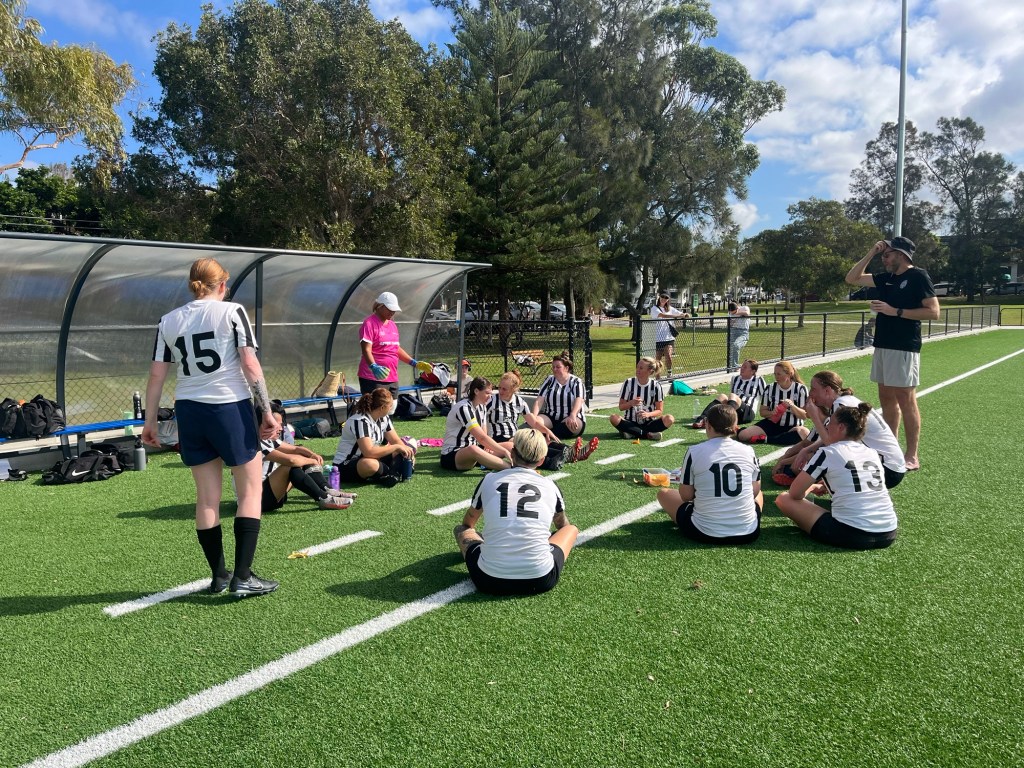
I wanted to take things out rather than add anything new, but the opportunity to coach a women’s soccer team came up, so I took the plunge and it’s a lot of fun.
I’m also inspired to write again (thanks Dr Taylor!) and deliver with consistency – the piece of the puzzle that, for me, remains elusive. But it’s far from impossible.
Weekends are precious. They are the time to relax, recharge and have some fun. But they can also be the time to get things done and learn some new skills.
How can you have a productive weekend without feeling overwhelmed or stressed?
Here are some tips:
Plan ahead. Decide what you want to accomplish and prioritise your tasks. Write them down. Schedule them in your calendar.
Set boundaries. Limit your work-related activities and avoid distractions. Turn off your notifications, email and social media (ever tried the Freedom app?). Say no to anything that isn’t aligned with your goals.
Balance work and play. Don’t forget to enjoy yourself and do something that makes you happy. Reward yourself for completing your tasks. Even do some celebrating when you knock over a big task.
Reflect and review. At the end of the weekend, take some time to reflect on what you did, what you learned and what you can improve. Review your progress. Would you change anything to make it better?
Give these tips a try. New skills take some effort but the payoff is real.
Here are six ways you can increase your personal impact, no matter what you do.
They’re taken from a 2014 Tom Peters slide deck I printed and bound because it was so useful. I pick it up and walk through it periodically. Even time I open the pages, the words pop off the page. They never get old.
Outwork ’em
Outread ’em
Outlast ’em
Show up
Listen
Keep an open mind
I’ll also add another one – master politics. If you can understand how politics works and the role it plays in all aspects of our lives, you’ll have an advantage over the majority of people you work and play with.
Which one are you going to start working on first?
It takes guts to stand up to bad people. The same applies to problems of any kind.
The insecurity we feel when we realise what’s going on, the nerves about what will happen, begin to build. We go through every “what if…?” scenario at 100 mph.
Some people in this spot decide to hide away, playing in the shadows. It gives them a chance to cover their tracks, hoping this is enough to kill the scent.
But it never is.
You’ve gotta own up and face the problem head on. Your weaknesses are obvious to all at this point. Vulnerability here is the path to strength.
Be humble. Admit you’ve made a mistake if that’s the case. Admit you don’t know what to do. Ask for help and listen when the feedback arrives, no matter how tough that might be under the circumstances.
Get the job done. Then go find another one. Use the improvements from this episode to reach new levels.
Onwards, always to better things, with a chunk of learning about yourself in your pocket.
I just checked out the caffeine in a pack of Berocca Boost. Wow, it’s wild. That 75mg shot will jack you up for a few hours, no doubt. But how can you imporve your energy levels and not have to resort to the artificial approach?
Sleep
Making sure you get enough is massive. Your body can go for days on end with no food and little water but take away sleep and you’ll stop functioning.
Get to bed at a smart hour, say 10pm, for a week. Keep your devices out of the bedroom so there’s no temptation to check them. Set a challenge to wake up at the same time every day for a week, aiming to make it stick. That’s a great start to forming good sleep habits.
Diet
Caffeine stays in your system for as much as eight hours. That cappuccino after dinner, or the piccolo to get you through the afternoon, makes it impossible for your sleep schedule to work.
Processed foods are a big negative factor, too. The hidden fats and sugars they contain make it harder for your body to digest them, using up additional energy. Hit the fruit and veg hard for a week. Maybe start the day with a smoothie. Your brain and body will feel the benefits instantly.
Screen time
Staring at screens increases stress levels and stops you from interacting with the world. It kills your efficiency stone dead. Can you cut it down?
Less focus on screens improves your sleep for starters, giving your better quality rest. If you can shut screens down for an hour before you get into bed, you’ll also decrease stimulation sources and naturally relax before you hit the sack.
I’m no doctor and this is generic advice. Please consult the pros if this is something you have big problems with. Your energy supplies are limited so do what you can to support yourself each day. A small change or two can go a long way.
Scrolling is a death spiral. Anything you’re working on disappears from your mind. The plot gets lost.
All that replaces the work is someone else’s life or a product you don’t need. Those best bits of the lives of others, served up in that never-ending fire hose of content.
We all get blasted by it. Anyone who says they haven’t – they can deal with it, it’s under control – is not being truthful. It’s like being on a water slide. All that can stop you once you take off is the smash into the pool at the bottom.
The remorse after any amount of time spent scrolling is hard to take. I put Instagram back on my phone about one month ago. Already I can feel its hooks are firmly embedded. I’m in, posting a little and consuming a lot, just they way they like it.
And, boy, do those five minute blocks add up. Between YouTube and Instagram I’m averaging nine hours a week. The waste of that amount of time is tangible. It’s painful to see the facts, whatever level of control I imagine I have.
The challenge is to now do something about it.
Take your own audit of how the scroll affects you. The results might spur you on to some positive changes. If you can go from consuming to producing content, for example, putting those scrolling hours to good use, things could be different.
When the call to the big leagues arrives, you want to be at your best. Your skills in whatever you do for a living will get you to the top eventually. They can, however, also work against you if you’ve not got them primed and ready at all times.
Do you want to be more efficient than your colleagues? Are you struggling to stand out in your team and get ahead? By learning skills we all use every day to a proficiency level beyond the basic, it won’t be hard.
If you open Excel every three months, you’ll be rusty at best for the first few minutes. If you need a pivot table or some conditional formatting, you’ll be browsing YouTube for tips. The clock will be ticking. Stress will build.
Instead, do a bit of research. What are the top ten things you do everyday that you can improve at? Do you open PowerPoint occasionally but often need a deck in a hurry? Is simple business writing a big part of your job, proof reading and rewriting reports, or sending emails about emails?
Think about what you can work on that will increase your output speed or improve your overall skill level. (Business writing excellence, by the way, is a lost art, so if you make this your goal, you’ll be in high demand.)
We build muscles by training. The same rules apply here, too. Make a plan to practice often by using mini-projects (writing blog posts, maybe?) and having the apps you need open, or the tools close to hand, all the time. Sharpen that sword with regular effort. The benefits will compound over time.
When a project kicks off and the call goes out for a skillset that the team is lacking or doesn’t have in depth, you’ll be ready. Put your hand up and you’ll get the chance to shine. Your contribution will stand out. You’ll deliver at speed with little stress because you’re in control.
And next time the need arises, who’s name will be top of the list? You’ll be remembered for volunteering, for doing an excellent job, and for being efficient – a most-wanted skill when the pressure is on.
Take a few courses. Watch a few YouTube videos. The notes you make and that handful of shortcuts and practice presentations hiding on your hard drive could get you more than you bargained for.


 Ian Mountford