Being Quiet

I think this is a page from Lao Tzu. Can’t remember for sure, but it resonates anyhow. Getting carried away in the chase for more, the hunt for shiny things, can take us to places we don’t want to go to. Balance need against greed and the answers will start to come to you.

Brim-fill the bowl, it’ll spill over

Keep sharpening the blade, you’ll soon blunt it.

Nobody can protect a house full of gold and jade.

Wealth, status, pride, are their own ruin.

To do good, work well, and lie low is the way of the blessing.

Robert A. Caro

Ever heard of Robert Caro? I thought not. Look him up and get your hands on his work. If you have, you’ll know why I reckon he’s The Man in terms of writing and journalism. He’s still working, well into his 80’s. It’s a job that he’s filled full of passion through the years.

His life’s work has been telling the stories of only a couple of men who changed society in their own ways. His first book, The Power Broker, describes the rise and fall of the most powerful unelected official ever to hold office inside a democracy, Robert Moses. The guy built the infrastructure of modern New York City – parkways, public parks, bridges, beaches, and tunnels – but ruined numerous lives – those of everyday politicians brave enough to vote against his projects, anyone in a property on a route he wanted to develop, and anyone else who got under his feet – along the way.

The Power Broker won the Pulitzer Prize in the 70s when it came out after a few years in the making. The title sums it up but the combination of great investigative journalism, sound non-fiction wordsmithing and a killer story underpin why Obama credits it as the book that got him into politics.

I’m biased – I admire the man. His work shines as a beacon of hope in today’s world of influencers and fakery. He’s a brilliant writer. He calls in his lunch order to the same cafe, the Cosmic Diner, at the same time every day. Talk about consistency. Give his work a try if you’re into biographies and non-fiction.

Be interesting and interested

This much-used sentence is one that I heard a long time ago but still resonates with me on an almost daily basis. It’s a rare skill but it stands out like wearing bright colours or dying your hair pink. It gets you noticed.

Being interesting is something that those who have travelled the world or have years of experience can rely on – sometimes a little too much. Their stories can become repetitive. That time they swam with sharks in the Bahamas or wrestled a bear in the Dagestan mountains was a jaw-dropper the first time around, but, after a few more mentions, its impact is lost.

All it takes to be interesting is to know what you’re about and be prepared to talk about it. It’s about standing for something and having opinions. It’s having an identity and being able to explain what it means to anyone in basic terms.

The interested part is about asking questions and actually listening to the answers. It’s about your follow up questions to go deeper and find out more. It makes conversations flow and lets people focus on their favorite topic – themselves.

I always remember the people who ask me questions. They’re normally the ones with an interesting background. Isn’t that funny? Maybe they’ve worked this game out.

Get things done using these steps

1 – Hold your hand up and own whatever it is that you want to work on, fix or change.

2 – Make a simple plan with a start, a middle and an ending.

3 – Find people who can help you and form a team.

4 – Do the things you need to do and none of the things you don’t. Distractions will kill progress.

5 – Don’t stop until you’re finished.

Order over chaos

Tidying my workspace has opened up some space that has been blocked for a long time. I haven’t published anything here, even a photo, for a while. I’ve been working hard and learning a lot of new things, and I’ve also been writing a lot for myself.

The act of introducing some order to my workspace has been the catalyst. Even some small effort to throw out the old and become more organised is worthwhile. Create space for new ideas to hit you. New stuff can find its way onto your agenda because there’s room for it.

If you paint a room, it feels different. If you eat something new, you get a different sensation. Being surrounded by chaos can force you to find safe places or avoid the chaotic ones all together. But having some order can lead to better results. Habits and routines form, leading to better and more consistent outputs.

That’s the theory. There’s one way to find out if it works…

Unfulfilling work

We all have work of some kind to do. When this work drains you and leaves you thinking ‘Why?”, over and over each day, you’re on a slippery slope.

I mowed lawns to help my Uncle out when I lived with him and his family. I was in my 20’s and had never thought about what made a job satisfying. It was simple work – we cut grass and took it away on the back of a truck – but it symbolised something bigger that I didn’t realise until much later on in life.

Turning a messy lawn into a tidy one is a cathartic process. As we drove away, we could see the difference our work had made. There was no deep-and-meaningful sense of amazement and wonder at what we had done – it was as simple a job as anyone could have, after all – but seeing the result of your work gave immediate, tangible feedback at the transformation.

Most of us spend our days pumping out emails about emails and attending meetings on everything and anything. Craftsmen and women are still around but in much smaller numbers today. Hitting ‘send’ time after time, rather than cutting grass, building a brick wall, or servicing a bike and handing it back to its owner, does not have the same effect on a human.

Knowledge work – the ‘keyboard warrior’ stuff done by the majority in our world today – has to be fulfilling or it can drain us of positive energy. All work types can be repetitive and monotonous at times and this can be hard to avoid. The challenge is to add meaning of some kind in a personal or organisational sense. Helping employees to achieve this can go a long way to keeping them engaged and away from the vacancies of your competitors.

The life cycle of the LinkedIn community

You find me through search and check out my profile, see a comment I’ve made on someone’s post, hear about me from someone else or receive a message from me and decide I’m a good contact to have.

We follow each other’s activity on the platform. We add reactions to posts and a few comments here and there.

We learn from each other and build trust in the fact that each of us are subject matter experts and know how to solve the problems our clients face every day. We might get a coffee at some point down the line, or even collaborate on some content.

At some stage, we could work together. There was no direct pitching as we got to know each other – trust developed and it became a no-brainer.

I got a tremendous recommendation from you when we completed the project. Referrals from your friends and colleagues then began to arrive.

And we begin again…

Iron sharpens iron

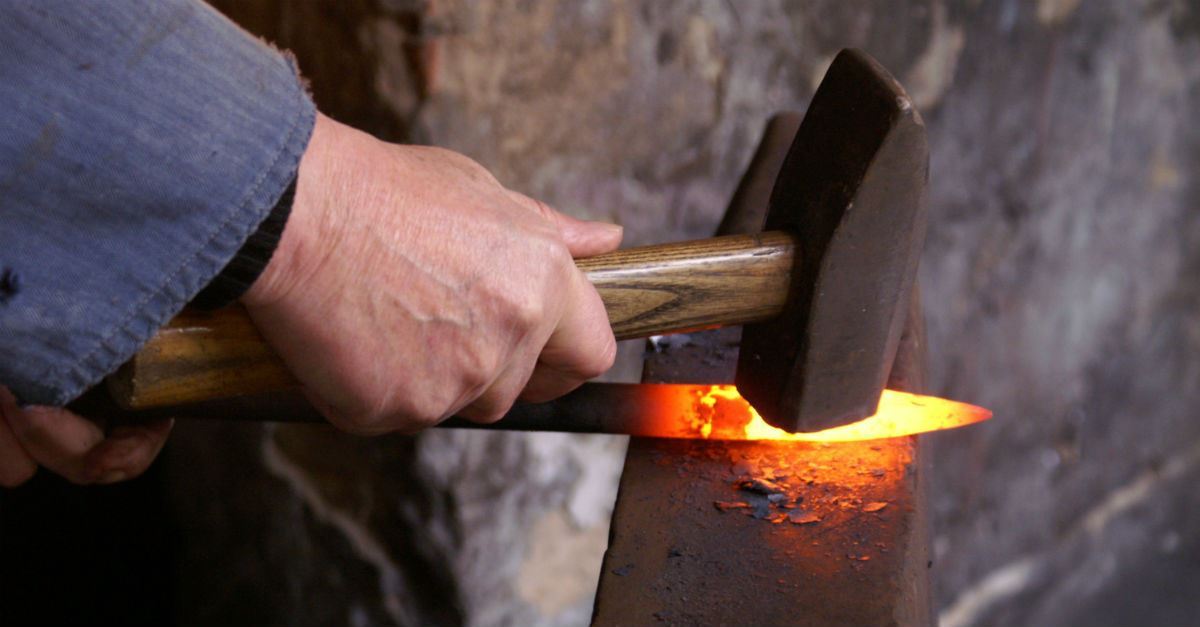
In olden times, the iron edge or blade of a tool was made sharper by working it with more iron.

The process of putting the two surfaces together delivered a change that wouldn’t happen otherwise – both pieces of iron would stay the same.

Switch this into our world today. What’s this got to do with you and I?

It’s about showing up in places where you’re not 100% confident and doing your thing anyway. 

Testing yourself against experts and learning along the way.

We grow through taking action, doing the things we find hard and that we don’t want to do.

Pushing hard through barriers and blocks (some real and some imagined) and making mistakes.

This happens all the time with people new to using Social Media and creating content. 

It’s hard to keep showing up at the beginning, feeling like we’re out of our depth and way behind everyone else.

But this is the signal that you’re in the right place. 

This is your test. You’re in the process of changing for the better.

Hang in there.

Who’s on your team?

Watching the Jordan documentary ‘The Last Dance’ made me think about the value of those around you.

Who’s on your team in life?

Having a virtual SWAT team of people who can help you when you problems pop up makes a lot of sense. 

We have doctors and dentists lined up, but do we have the same for other types of stuff like feelings of anxiety, putting on weight, improving our writing, etc?

Our friends can get us so far, but are they real pros who will be there when we need them?

So many people are looking for the best in everything but don’t invest in people who can help them to get there. 

Seeking out those who are at the top of their game is a big step forward.

And then the real work starts.

My first money maker

I was maybe 14 years old. The thought of washing cars for a day or wandering around our school selling homemade cakes filled me with dread. I wanted to go bigger than that. Much bigger. 

I decided we were going to put on a disco with a live band. (I don’t think I let anyone else have much of a say if I thought we could make it happen – not much change there over the years.) 

Someone’s mate knew the band and they said yes. This was a big deal – we had a gig! 

We bought a few 7 inch singles with the small amount of money we had between us and looked deep into our own collections. 

We made our own tickets and got someone else’s friend to design a poster.

I think we called it “The Nite Spot” and the image was of a spotty-faced kid with a huge one on the end of his chin. Just writing this makes me gross out. I think I still have the original poster somewhere.

Teachers got involved. We had a soft drinks bar and I have no idea how this worked out but it all made money. Add on ticket sales and we did very well for young kids. I think the school charged us a fee to use the hall at night but there was cash left over at the end. 

It was so exciting to be a part of.

It was a live event and anything could have gone wrong. I was worried that some of the older kids would cause trouble, maybe start a fight or two, but it all went well and we had no issues. 

I forgot about it for a long time – probably not until I had ideas for my own business back in 2005 and, by then, the flame it had lit was well and truly snuffed out by years of corporate bull shit. 

But I’ll never forget it. 

It was frightening and scary to take on such a task and all the responsibility that went with it. And when it was over, we all breathed a sigh of relief.

If I could do it all again tomorrow, I would. And a whole lot more, too.

Get off the fence

LinkedIn is a place where the majority are frightened of saying what they think.

Those who put their cards on the table and make it known where they stand on matters tend to polarise opinion. At the same time, a lot of people are also secretly envious of their approach. 

“Look at what (so-and-so) said! Wow, that’s really out there…”

“(I wish I’d had the balls to post that.)”

LinkedIn is especially bad for this. It’s a social media tool used by professionals and is known as somewhere you show up in ‘business mode’, i.e. don’t piss anyone off and say nice things to everyone without causing any trouble. 

But above all else it’s a community. In communities of all kinds the reality is that not everyone agrees or gets along 100% of the time. 

I’m ok with this. I like to stir it up when I can and I’m passionate about the things I believe no matter who’s watching. 

Why not? We only live once, right?

So I feel for those poor people stuck on the fence trying to play nice with everyone and then resenting three quarters of the posts they see every day.

We need debate. We need a broad range of opinions. 

We also have our fair share of folks who just say things that they know will cause problems. I have a name for these people – I’ll let you make up your own. 

There is space for many, many more people to get off the fence and let rip, too. 

“It’s better to have something to remember than anything to regret.” – Frank Zappa

The most valuable skill in business

The list of business skills is enormous, but which one is the most valuable?

Each non-fiction business book has it’s hot favourite.

Sales is always up there, especially because you can so easily convert the value into the metric of cash.

Communication and leadership skills are also important and often lauded as ones to work on at all opportunities.

One of my favourites is negotiation. It cuts across so many other areas of our lives and has a huge effect when you understand the psychology at play.

And the list goes on…

Marketing, coaching and project management…

Networking and looking after the numbers… 

Their importance can differ depending on who you follow or talk to.

What comes top of your list?

The benefits of showing up online

Social Media is responsible for all of the worst things that happen in the world today – or so you would think if you pay attention to the news media.

The truth is quite the opposite in many cases. 

There will always be those who hide behind their keyboards and spread hatred from the relative safety of their sofa. These are also the people who think that spamming is a clever and profitable way to spend their time. 

I’m more interested in the positives of Social Media and feel there are many. Here are a couple, specifically based on a mini project I’ve been doing daily on Facebook:

Firstly, you develop confidence from learning new skills. 

Writers have to work harder at brevity, keeping posts short but effective at the same time. Artists and photographers have to work out new ways to stand out from the crowd. 

Lawyers also ask me how they can demonstrate to their clients how they solve problems rather than tell everyone how amazing they are (their favourite thing in the world). 

Next, you can make new connections and build an important new kind of network. 

Being part of old school face-to-face networking groups has its place. Being part of a fun, fast-moving and thriving Facebook Group can be just as good, if not better.

The connections and friends you make in these Groups online can carry over into real life, too. 

Not everyone behind a keyboard is a weirdo. Talk to them and work it out for yourself.

And, finally, the more you show up, the better things will be overall. 

I’ve been making a Monday to Friday Facebook Live called ‘Showing Up’ for my community and I’ve had some interesting feedback. 

It has started conversations, created a few discussions and plenty of laughter. 

It’s also helped me to reconnect with a few old contacts who tend to stalk more than participate.

But, most importantly, it’s got me to spend more time in a place where I wasn’t giving my best and that’s important for me. I’m an expert in this stuff and I always need to be at the sharp edge.

Train the brain

It’s as crucial as any other kind of training. And, in many ways, it’s more important.

Every day I’m trying to do some kind of mental exercise to improve my thinking and use the power of my brain.

It might be meditation. It might be writing my lists of ten new ideas. It might just be writing a post such as this one.

But I do it every day without fail. I don’t miss a day because I know it’s having a huge effect on my long term results. 

And I’m very focussed on the long term.

Short term is also important – we’ve gotta eat, right? But long term thinking and effort makes so much more sense for me. 

My brain operating on level ten is the goal for as long as I’m still breathing and daily training makes this increasingly likely.

How about we check back in 50 years (age 98) and see if everything’s still working?!

Ten of my favourite books

(These are in no particular order of favouritism.)

  • Resilience, Eric Greitens
  • Discipline Equals Freedom: A Field Manual, Jocko Willink
  • Bonfire of the Vanities, Tom Wolfe
  • The Warrior Ethos, Steven Pressfield
  • How To Get Rich, Felix Dennis
  • The War of Art, Steven Pressfield
  • Do The Work, Steven Pressfield
  • The Effective Executive, Peter A. Drucker
  • Confessions of An Advertising Man, David Ogilvy
  • Casino Royale, Ian Fleming

What would be top of your list?

Can you sell?

I had no money in my pocket and no ideas on how to make more. The job was gone, the part-time business was drifting along and I didn’t know where to start.

It was a few years ago but it was a tough time. 

I had a 9 mile journey to the place I was working at (for a couple of weeks before they made me redundant) and also had to buy some food, so the toss up was between the bus or food.

I walked. 

Learn skills and change behaviour

I had to learn how to sell. Sell myself, my skills, my experience at this stage and then, later on, my products and services. 

The alternative was to go hungry and start asking for handouts. I wasn’t ready for that.

I had to learn and change.

These sales skills have been incredibly important. 

How to overcome objections. How to handle difficult customers and clients through basic communications. How to negotiate for the best price and maximum value from any deal.

I use scripts to keep me on track and I review and refresh these scripts to make certain that I’m always improving. 

I know when to push and when to pull back. 

These skills are so important to me. They keep everything moving forwards and allow me to build new relationships, spot opportunities and build a more successful and prosperous life. 

Even a few basics will help you a great deal. 

If you don’t ‘like’ selling or feel you can’t do it, take a step towards it and do some learning. It will add confidence to everything you do and help you in many parts of your life. 

And you’ll always be in control of a deal. Very important!

I haven’t got time

Ask people to do something that’s crucial for their health, their stomach or their sex life and they’ll drop everything and do it right away. 

Anything else? Good luck getting it done anytime soon. 

There’s always time for scrolling and watching TV. Yoga classes and reading endless self help books. Another news notification or LinkedIn comment to reply to.

But something to work on that’s hard to achieve, really important and has a lifelong impact if you can work it out? Bottom of the list.

Lack of purpose

Those who say they haven’t got time for the important stuff in life don’t understand what avoiding it really means. They’re drifting through each day. They lack purpose and goals. They’re putting everyone and everything else in life before themselves.

If you tell everyone you’re always busy, you really need to have a look at how you spend your time. 

Are you honestly flat-out for 8 to 10 hours a day working? I think not. 

It sounds cool to be busy. 

People act impressed when we say that we’re under the pump, but rarely is this busy with stuff that’s getting us closer to our personal goals. 

We put all that off because, of course, we’re too busy. “I haven’t got time.”

Time is easy to find

If you were given a free, all-expenses-paid holiday for three weeks leaving in three hours time and you had to complete your work before you left, you’d get it done. 

If someone close to you was about to die and you had the chance to see them before they passed away, you’d be there. 

So why don’t you go to the gym and work out when you say you will? 

Why do you eat the wrong stuff when you know you shouldn’t? 

Why do you skip meditation, don’t clean your teeth, or go to bed an hour later than you know you should?

The priority is not you

It’s because to you, you’re not the priority. You’re bottom of your list and everyone and everything else is above you. 

You have time for client calls and meetings about meetings and emails – endless emails.

But your growth and wellbeing? Your health and wellness? It always comes second.

And then you wonder why you suffer. Why you have issues with anger and anxiety.

Top of your list

Getting some order in your life will help. Start with a calendar and go from there. 

But first, take it even further back. Ask yourself why you’re not top of your list every single day. 

Solve that one and things will gradually get better.
Is your main message clear?

I’m constantly looking people up online to find out what they’re all about. I might want their help, want to work with them, or just want to see who they are and what they do.

Half the time, I see what I want and don’t have to scroll too far. But the other half can be terribly frustrating.

How clear is your main message?

When people land on your profile (and you’re in business, whatever that might be) they need to be able to work out quickly and easily what you do and how to work with you. 

If they have to dive deep, click through a couple of pages and do a tonne of scrolling to work out what you’re about, the chances of them moving to another page are high.

Signposts work really well.

Some sites have ‘who are you and what do you want?’ buttons right there on the front page. They can be confronting but they make it easy for the user to find what they want. This is what matters most – it’s all about the user. 

Even profiles on places like LinkedIn matter when it comes to this.

Use the headline and the ‘about’ info to make it clear how you can help people and you’ll get better results. 

Be specific and do it with purpose and the enquiries you get will be from the right people.

Can you get more from less?

So much stuff that we write doesn’t get read. Emails, blog posts, posts of all kinds. We just don’t have time to read everything. There’s so much coming at us today from all angles.

Brevity rules

If you can say it in 300 words or less, you’re winning. 

If you can say it in 100, the chances of what you write being seen and read increases by a big margin.

Add a call to action – eg. come and say hi on Facebook – and this post is long enough. I’ve made a point, given a tip and asked you, the reader, to do something to get you into action. 

Do you actually need much more than this? 

(And this one’s over 100, even in this short format.)

Stop making noise

I spend a lot of time every day looking at online content produced by businesses and professionals – it’s my job – and the majority of it is awful. 

Depending on what I’m researching or working on during any particular day, I’m lucky if I see more than a couple of posts that make me stop scrolling and click through for more. The majority is meaningless, purely promotional and lacks any true insight or depth. 

Stop making noise

You have to have a purpose when you post online. The content that cuts through drives us through emotion into action or solves a problem that we could do with fixing.

If you’ve won an award, I and many others don’t care. Awards are not an accurate reflection of the best businesses or individuals out there – the net has to be cast a lot wider than those who bothered to apply.

If you post a shot of you standing on a stage, tell me what you were saying that will change my life and then I’ll take notice. A photo of you speaking to a crowd adds credibility but tell us your ‘why’ – your reason for being on that stage. That’s more relevant to me and it might make me want to learn more about you.

Above all else, make the content about me, the reader. Show me what you do best. Show me the best of you. Open up. Be raw and honest. Tell me what I need to do and how that’s going to improve my work or life every day. 

Make it worth my while to stop scrolling or I’m gone.