
From this morning’s walk along the coast. The wind was blowing and the rain came down, but when the sun came out it was spectacular.
From this morning’s walk along the coast. The wind was blowing and the rain came down, but when the sun came out it was spectacular.
The less friction there is between thought and action, the better.
Logging in? Picking a different device? Turning on a keyboard? All slows me down when it comes to writing something, for example.
This can apply to most things we want to do that carry the ‘hard’ label, requiring some thought and effort.
The chances of producing something new reduces once the ‘thinking about how to do it’ procrastination process starts.
The fast, simple route is the good one here.
Who you see, the tools you use, where you work, the position of your desk in your home, the stuff you experience every day – it all has to support you in the daily journey towards achievement of your goals.
How can you improve your environment along these lines?
Think in terms of people, process, and technology.
Do you need to be around a more supportive crew on a daily basis?
Is your bedtime routine making it hard for you to get up on time, and therefore start the day on time, and in a good frame of mind?
Do you use software tools that help you day-to-day, or are you the kind of person who signs up for everything but uses very little functionality of each app after the initial flurry of activity once the novelty has worn off?
It could be time to move your desk towards the window for more light, or even move to somewhere new.
Are you warm in the winter, and cool in the summer, or do you need to get warmer in the winter months, for example?
Could a new picture in a frame on your desk of someone you care about make a difference to how long you spend sat there, and the quality of work you produce?
Ponder on this topic for a while.
Understanding the impact of this overarching statement can have a big impact over time. That’s our shared goal, right?

Nobody changed the world while scrolling.
Ever used the ‘Screen Time’ app on the iPhone (see above)? (Sure there’s gotta be one on Android phones, too). It’s scary to come face to face with the real number, knowing how much content you’ve watched.
Add on the odd video on other devices. The videos in your lunch hour on the work laptop, or something your friend shows you on their phone. This stuff adds up to some massive numbers.
The time taken to produce something is far, far less than the time we spend consuming.
Why not start your own blog, or write something in your journal, or start a journal or blog if you don’t have one right now?
It has to be better for you than watching more of other people’s stuff for hours on end.
Here’s a list to start you off with what to write about:
Obviously this is only the tip of the iceberg. Use it to get started and see what your own brain can come up with.
Heard this very special quote this morning, from one of the ancient Greek poets:
“Become such as you are, having learned what that is.” – Pindar
Until we take time to understand ourselves and our purpose, we can’t expect to find all of the answers we crave.
Understand your true nature.
Your strengths, weaknesses, and passions.
We are in such a hurry to get to the solution (especially us men). This isn’t always the ideal solution.
The answers will come when we stop and think.
Give it a try. Embark on your own voyage of self discovery.


Jurgen Klopp, Jose Mourinho, Sir Clive Woodward, Carlo Ancelotti, Sir Steve Hansen, Dave Alfred, Phil Jackson. These are the best of the best.
And the list goes on with Pep Guardiola, Xabi Alonso, Sir Alex Ferguson.
Who’s your favourite?
The examples of top coaches across the world in all sports are living, breathing textbooks.
Their life histories show similar traits. Many were ex-players. Some were winners but some didn’t get far at all.
Their former players show them respect and admiration for the things they achieved together in almost all cases.
Taking time to study their history gives us blueprints we can use for our own lives.
They always had a plan.
They had goals for their teams. They wanted the titles, trophies, domination.
They deliberated on every detail, leaving nothing to chance.
They rarely took chances, but sometimes situations in games forced their hand.
And when they did, their players responded. The players knew their job within the system they were playing in and they succeeded.
These sources of learning are invaluable.
Sports isn’t everyone’s cup of tea but the lessons are plentiful and applicable to most aspects of everyday life.
Picking up a biography of a top coach or watching interviews with them on YouTube gives huge insights we can all learn from.
I’ve been training boxing and martial arts for a few years now.
Striking is not something I’ve done before. The subtleties take some understanding.
Attacking is great with the trainer holding pads. Drilling basic combinations without having any punches come back at you is simple.
It feels great to hit the pad right in the centre, over and over.
Bur being hit is a totally different thing.
Learning to defend punches and throw your own in response is a whole different ballgame.
The fear centre of our brain starts to respond.
“I’m under attack!”, “WTF do I do now???”
Anything we’ve learned, even basic defensive moves, can be hard to pull off as the brain takes over, screaming at us to cover up.
The eyes close as a fist comes towards them. And rarely does anything good happen immediately after this.
Think about this in other parts of life. There’s definitely some similarities.
We get into an argument or any kind of heightened emotional state and the red mist arrives.
We say things we don’t mean to.
We can’t think clearly.
Unless we’re prepared, unless we have a plan, bad things can happen.
The distinction between these two skills, and the importance of knowing what to do when either of them arrives, is worth some contemplation.
Don’t just talk about what you’re going to do. Get started and do it.
I’m guilty of this. We all are on certain things in life, no doubt.
Take this blog. It’s been an on/off escapade for years now.
If you’re not adding to it frequently, it grows weeds and dies a slow death. Nobody visits the pages. The posts will remain unread.
Knowing you’ve invested cash in a domain, or have spent money on some fancy editing tools, eats away at your subconscious mind.
You’ve spent that money and you’re doing nothing with it.
All this stuff sitting in our heads, it’s toxic.
The easy fix – get to work and start typing.
It really is that simple.
You’re not Wordsworth on day 1, or even day 10,001, but you’ll be somewhere you’re definitely not today.
And if you make a plan and map out the moves you want to make over time, the action turns plans into reality.
Placed an order yesterday for some new insights:
Daniel Kahneman – Thinking, Fast and Slow: I’m aware of economic theory but it’s a long time since I took steps to go a little deeper. This will be my jumping off point on that one.
Scott Galloway – The Algebra of Wealth: Personal finance strategy affects us all but most of us spend hardly any time thinking about what we are doing, let alone taking action.
The First 90 Days – Michael Watkins: I’m starting a new job in a couple of weeks. I like to go into anything with some kind of plan, however rudimentary. Similar books of this kind are on my shelves and this one could add a new angle.
(I don’t do affiliate marketing and don’t want to automatically send anyone to Amazon so this is why there are no links.)
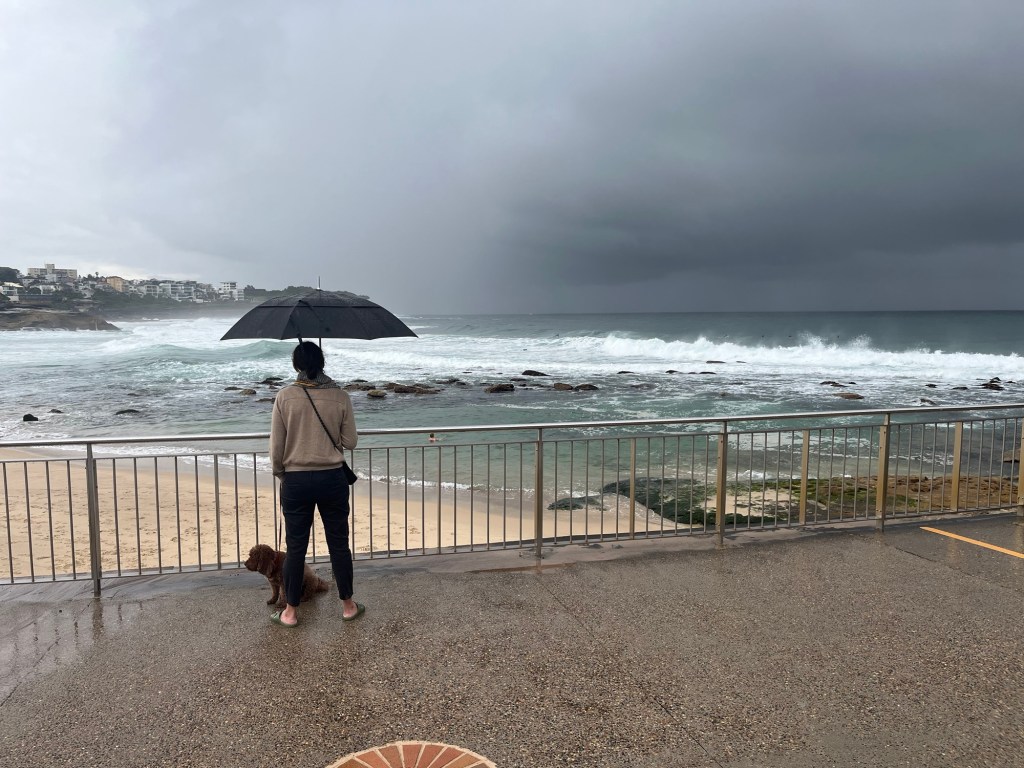

The hard work is ahead. I’m running a final marathon this year before my knees break down.
I got through the hurdle of a half marathon last week. Training now steps up to distances much further, staying on my feet for longer.
It’s always harder in my head than it is to do the actual running.
The running is the fun part. The pain comes and I grind through it. One foot in front of the other, over and over.
Thinking about it – letting my brain get in the way – makes the task more difficult.
When we run, pushing towards our physical limits, we get a look at how we react to pain and stress. We hear our brain telling us to slow down, take shortcuts, or simply stop.
The challenge is laid down – easy or hard path? Which one do you want? Growth or stagnation? Settle for what you have, for who you are right now, or grow into someone else? Someone you don’t know yet. Someone you’ve never met.
The action gives us the answers.
The act of not doing what my brain says, and doing what my plan says – following my process – is where the growth comes from.
The act of ‘less thought, more action’ doesn’t apply universally, but the more I take action without the ‘what if…?’ thoughts that let the brain get the upper hand, the better the results.
Nice quote from Phil Jackson’s book, ‘Eleven Rings’ (beginning of chapter 19):
“Forget mistakes, forget failures, forget everything, except what you’re going to do now and do it.
Today is your lucky day.”
The mess our brains can make of getting through each day is real.
Competing interests, pressure from all sides, the desire to be perfect, all that nonsense.
If you can get into the ‘chop wood, carry water’ mindset, the noise in our brains quietens.
Find the focus in the next task you want to do and go do it. Then the next, over and over.
Sports books and metaphors from sport, or Buddhist philosophies for quieting a noisy mind, don’t sit well with everyone, but they can help you put the pieces together that work for you.
It’s about what you need to get through the day.
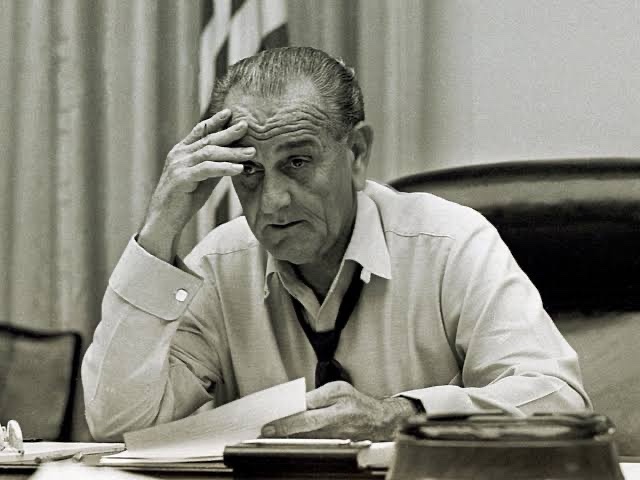
Reading book two of the Robert Caro series on Lyndon Baines Johnson at the moment. These are four epic pieces of non fiction, researched over many years, rightly winning all the plaudits.
I started with little knowledge of the guy other than the fact that he made it to the White House; details of his upbringing were unknown. The way he made it into politics was also unclear.
The thing that’s standing out to me as I near the end of book two – Means of Ascent – is how low this guy was prepared to go to make his political dreams come true.
I won’t spoil the plot. The usual antics of the power hungry are clear throughout, but there’s a deeper urgency to ‘make it’ on his part. A true desperation. The pages reek of it.
His wife, ‘Lady Bird’ Johnson, survived him by a number of years, hopefully to enjoy a life that would never have been possible with him still alive, sucking up all of the glory.
The lies, endlessly cultivating a false impression, wrapped up and sold to hapless voters in all parts, are a theme all of their own.
And the voters bought it. His supporters got what they wanted and their man got the top job he craved, no matter what it took to get there.
There are so many lessons in this story. I’ll let on more when I work through the series.
Any kind of loss stinks.
No-one goes into any situation expecting a loss so when it arrives it’s a smack in the mouth.
I like to wallow in it for a while. Spend some time thinking about why it happened, but not too much. Then move on. The past is gone.
Mistakes made? Correct them.
Errors of judgment or a bad choice of words? Learn from it.
Resolve not to do it again. Then move on.
The sun will come up tomorrow. It hasn’t failed once.
Grab onto that fact if nothing else works.
Then go hunt for wins instead. Much less stinky.
Tell people what you like about them.
Let people know how you feel about the positive things they do.
People don’t know this about themselves unless we tell them. So tell them. Be open about it.
And it’ll probably come back. Your friends will reciprocate.
The good vibes will spread.
What’s not to like about that?

Came across this excellent learning resource for all things AI, focussed on busy professionals looking to get ahead of the crowd quickly and efficiently.
Section – the business behind the training – is backed by best-selling author, NYU Professor of Marketing and podcaster Scott Galloway.
His work stands out in the world we live in today as forward thinking, a challenge to the status quo, and a call to action for people glued to their screens looking forward to little more than minimum wage work (and lots of it) for years to come.
Upskilling and lifelong learning are more than just buzzwords. They’re the way to stand out, get better opportunities and earn more over time.
Get involved. It’s never too late to start.
When I walk side-by-side with someone, or drive with them in a car, the conversation tends to flow better.
I’m not certain why. Maybe because it feels less confrontational, not looking straight at the other person.
Some great ideas have come this way. It could be that there’s the element of an added ‘journey’ you’re both sharing.
There’s also a clear start and finish. The conversation can’t be the same once the journey is over. You’re in a different time and space.
Fighting. Throwing hands, not the mouthing off at people version. There’s a lot to be said for knowing some basic skills.
Last week, a 78 year old guy stopped me and Scott as we were training for a knife attack in the basement of our apartment block. He told us he knew his onions, and within a couple of minutes he was demonstrating his favourite side kick.
He knew what he was doing. He had an aura, some kind of inner confidence that made it clear he was ok defending himself. He was ready.
He’s got a blank stare, the kind guys in jail have, and that was all I had ever noticed before. But now I can see what’s happening behind those dead eyes. He’s staying calm, assessing the situation. He’s looking out for what’s coming next – maybe a fist, maybe not.
These skills are things you carry with you in the hope that you’ll never have to use them. I hope I never have to front up to someone, ready to go, in defence of myself, my wife, or anyone else under attack.
Things happen fast when tempers flare. Words are said. Things can escalate quickly. People right now are under a lot of stress, even here in a chilled out place like Sydney.
If someone attacked you, what would you do? How would you get away from an attacker, for example? If all hell breaks loose around you, what’s your first move?
A basic plan, even something as simple as a rapid knee to the groin and run away as fast as you can, can go a long way.
Take that up a notch and think about classes in all forms of self defence. Krav Maga, Jiu Jitsu, whatever. When that moment happens, you’ll be glad you made the choice to start learning. It’s never wasted effort.
Stuff that’s scary, like hitting ‘publish’ on a deep, dark post that comes from the very depths of our souls, fills us with fear. The imposter jumps out on us, screaming that we’ll be ‘found out’, that our stuff is ‘nonsense’, and that nobody’s going to read it no matter how cool we think it is.
We moan about having no time. “If only I had the discipline…” must be said by so many wannabe writers and creatives. Our handheld procrastination device, full of the stuff we don’t need, pinging at us when it needs attention, is always by our side.
It’s no wonder we rarely act on that desire to do that ‘thing’.
I used to read Julien Smith’s blog in the early 00’s when I lived in the US. This particular post caught my attention as I sat at a big desk in a bigger office, bored out of my tiny mind. I printed it out. (The image of the horse jumping from the balcony has always stayed with me.)
I’ve referred back to it, and a few of his other ‘slaps to the face’, when I’ve caught myself navel gazing, feeling stuck. At the core of it is the fact that we all worry too much what other people think, and that the sooner we act on what we believe is right through telling the truth, OUR truth, a new chapter begins.
And this is the point here – whatever your ‘thing’ is, get into action by getting past your fear and start delivering.
What’s the worst thing that could happen? You could actually be good at it, people could like it and it could work out brilliantly.
This isn’t likely to be the case – let’s get real here – but the best had to start somewhere. And you do, too.
My time is tight. A full-on job plus part time study. I run or work out daily and fit golf in whenever the study slows down. I have a stack of unread books that grows weekly.
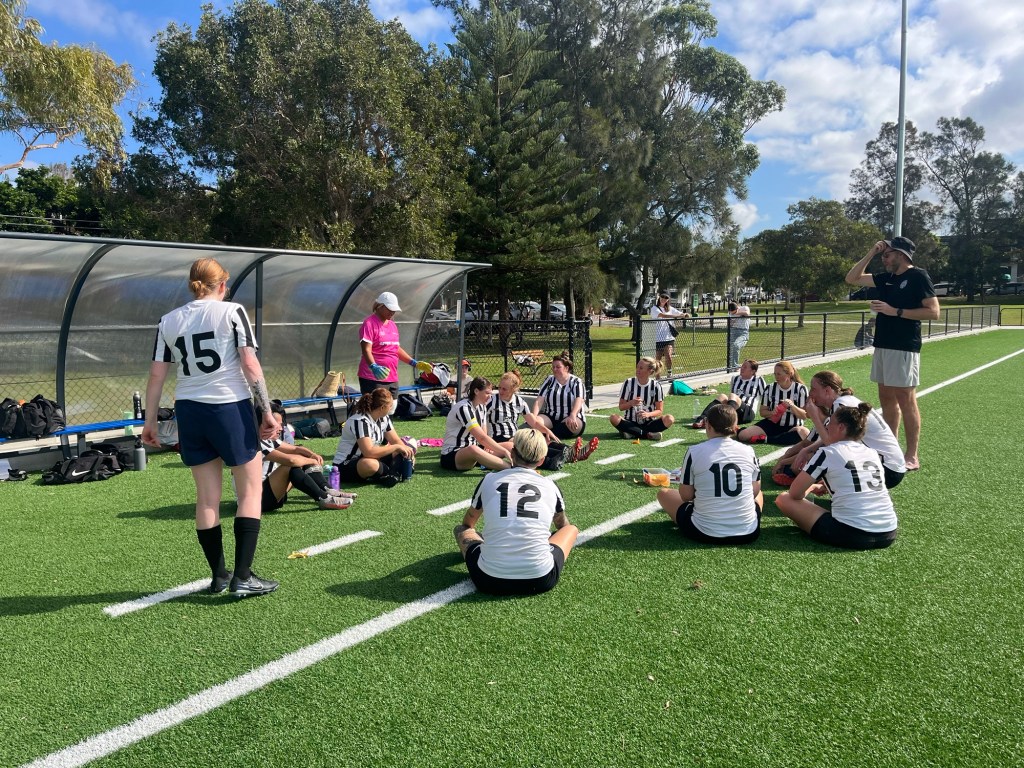
I wanted to take things out rather than add anything new, but the opportunity to coach a women’s soccer team came up, so I took the plunge and it’s a lot of fun.
I’m also inspired to write again (thanks Dr Taylor!) and deliver with consistency – the piece of the puzzle that, for me, remains elusive. But it’s far from impossible.
Let’s put it to the test.
 Ian Mountford