Category Archives: Random

Iron sharpens iron

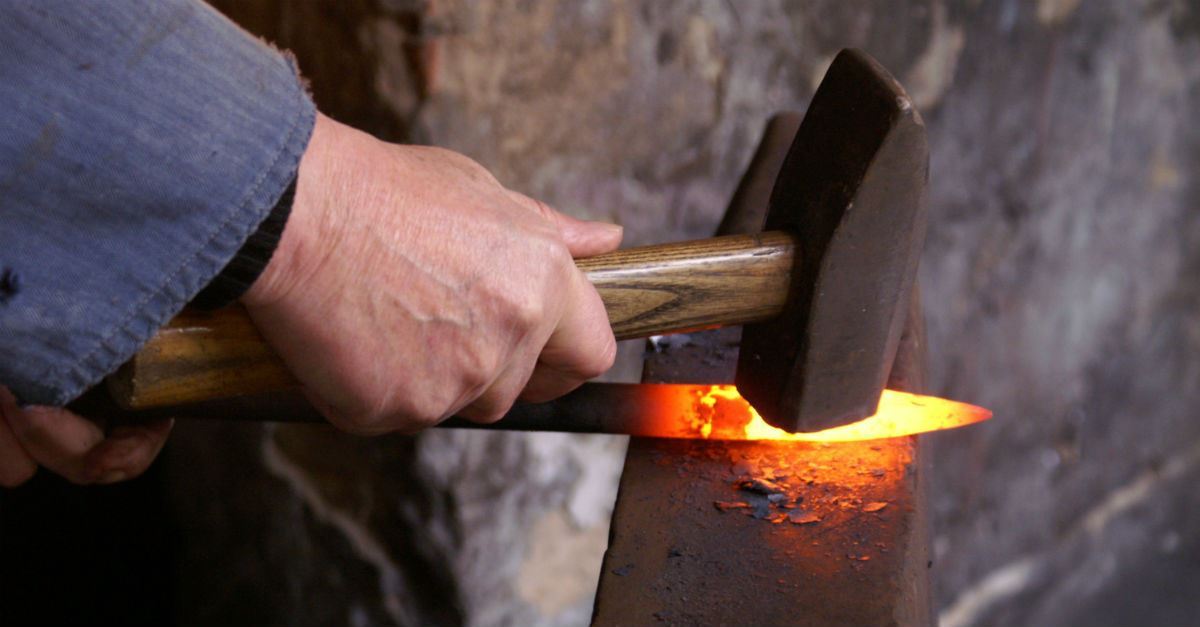
In olden times, the iron edge or blade of a tool was made sharper by working it with more iron.

The process of putting the two surfaces together delivered a change that wouldn’t happen otherwise – both pieces of iron would stay the same.

Switch this into our world today. What’s this got to do with you and I?

It’s about showing up in places where you’re not 100% confident and doing your thing anyway. 

Testing yourself against experts and learning along the way.

We grow through taking action, doing the things we find hard and that we don’t want to do.

Pushing hard through barriers and blocks (some real and some imagined) and making mistakes.

This happens all the time with people new to using Social Media and creating content. 

It’s hard to keep showing up at the beginning, feeling like we’re out of our depth and way behind everyone else.

But this is the signal that you’re in the right place. 

This is your test. You’re in the process of changing for the better.

Hang in there.

Who’s on your team?

Watching the Jordan documentary ‘The Last Dance’ made me think about the value of those around you.

Who’s on your team in life?

Having a virtual SWAT team of people who can help you when you problems pop up makes a lot of sense. 

We have doctors and dentists lined up, but do we have the same for other types of stuff like feelings of anxiety, putting on weight, improving our writing, etc?

Our friends can get us so far, but are they real pros who will be there when we need them?

So many people are looking for the best in everything but don’t invest in people who can help them to get there. 

Seeking out those who are at the top of their game is a big step forward.

And then the real work starts.

My first money maker

I was maybe 14 years old. The thought of washing cars for a day or wandering around our school selling homemade cakes filled me with dread. I wanted to go bigger than that. Much bigger. 

I decided we were going to put on a disco with a live band. (I don’t think I let anyone else have much of a say if I thought we could make it happen – not much change there over the years.) 

Someone’s mate knew the band and they said yes. This was a big deal – we had a gig! 

We bought a few 7 inch singles with the small amount of money we had between us and looked deep into our own collections. 

We made our own tickets and got someone else’s friend to design a poster.

I think we called it “The Nite Spot” and the image was of a spotty-faced kid with a huge one on the end of his chin. Just writing this makes me gross out. I think I still have the original poster somewhere.

Teachers got involved. We had a soft drinks bar and I have no idea how this worked out but it all made money. Add on ticket sales and we did very well for young kids. I think the school charged us a fee to use the hall at night but there was cash left over at the end. 

It was so exciting to be a part of.

It was a live event and anything could have gone wrong. I was worried that some of the older kids would cause trouble, maybe start a fight or two, but it all went well and we had no issues. 

I forgot about it for a long time – probably not until I had ideas for my own business back in 2005 and, by then, the flame it had lit was well and truly snuffed out by years of corporate bull shit. 

But I’ll never forget it. 

It was frightening and scary to take on such a task and all the responsibility that went with it. And when it was over, we all breathed a sigh of relief.

If I could do it all again tomorrow, I would. And a whole lot more, too.

The most valuable skill in business

The list of business skills is enormous, but which one is the most valuable?

Each non-fiction business book has it’s hot favourite.

Sales is always up there, especially because you can so easily convert the value into the metric of cash.

Communication and leadership skills are also important and often lauded as ones to work on at all opportunities.

One of my favourites is negotiation. It cuts across so many other areas of our lives and has a huge effect when you understand the psychology at play.

And the list goes on…

Marketing, coaching and project management…

Networking and looking after the numbers… 

Their importance can differ depending on who you follow or talk to.

What comes top of your list?

Train the brain

It’s as crucial as any other kind of training. And, in many ways, it’s more important.

Every day I’m trying to do some kind of mental exercise to improve my thinking and use the power of my brain.

It might be meditation. It might be writing my lists of ten new ideas. It might just be writing a post such as this one.

But I do it every day without fail. I don’t miss a day because I know it’s having a huge effect on my long term results. 

And I’m very focussed on the long term.

Short term is also important – we’ve gotta eat, right? But long term thinking and effort makes so much more sense for me. 

My brain operating on level ten is the goal for as long as I’m still breathing and daily training makes this increasingly likely.

How about we check back in 50 years (age 98) and see if everything’s still working?!

I haven’t got time

Ask people to do something that’s crucial for their health, their stomach or their sex life and they’ll drop everything and do it right away. 

Anything else? Good luck getting it done anytime soon. 

There’s always time for scrolling and watching TV. Yoga classes and reading endless self help books. Another news notification or LinkedIn comment to reply to.

But something to work on that’s hard to achieve, really important and has a lifelong impact if you can work it out? Bottom of the list.

Lack of purpose

Those who say they haven’t got time for the important stuff in life don’t understand what avoiding it really means. They’re drifting through each day. They lack purpose and goals. They’re putting everyone and everything else in life before themselves.

If you tell everyone you’re always busy, you really need to have a look at how you spend your time. 

Are you honestly flat-out for 8 to 10 hours a day working? I think not. 

It sounds cool to be busy. 

People act impressed when we say that we’re under the pump, but rarely is this busy with stuff that’s getting us closer to our personal goals. 

We put all that off because, of course, we’re too busy. “I haven’t got time.”

Time is easy to find

If you were given a free, all-expenses-paid holiday for three weeks leaving in three hours time and you had to complete your work before you left, you’d get it done. 

If someone close to you was about to die and you had the chance to see them before they passed away, you’d be there. 

So why don’t you go to the gym and work out when you say you will? 

Why do you eat the wrong stuff when you know you shouldn’t? 

Why do you skip meditation, don’t clean your teeth, or go to bed an hour later than you know you should?

The priority is not you

It’s because to you, you’re not the priority. You’re bottom of your list and everyone and everything else is above you. 

You have time for client calls and meetings about meetings and emails – endless emails.

But your growth and wellbeing? Your health and wellness? It always comes second.

And then you wonder why you suffer. Why you have issues with anger and anxiety.

Top of your list

Getting some order in your life will help. Start with a calendar and go from there. 

But first, take it even further back. Ask yourself why you’re not top of your list every single day. 

Solve that one and things will gradually get better.
Can you get more from less?

So much stuff that we write doesn’t get read. Emails, blog posts, posts of all kinds. We just don’t have time to read everything. There’s so much coming at us today from all angles.

Brevity rules

If you can say it in 300 words or less, you’re winning. 

If you can say it in 100, the chances of what you write being seen and read increases by a big margin.

Add a call to action – eg. come and say hi on Facebook – and this post is long enough. I’ve made a point, given a tip and asked you, the reader, to do something to get you into action. 

Do you actually need much more than this? 

(And this one’s over 100, even in this short format.)

Let go and grow

The middle is a horrible place to be and I’m in it. It’s packed with the majority and the mediocre. It’s a safe place but it’s only a place where things die. 

The thoughts of people who live in this place are destructive.

The stuff about fitting in with everyone else, not standing out. Nonsense. 

Those who are more concerned about pleasing other people than pleasing themselves. Living in fear of the consequences of other people not liking them. Enough already.

The ones who let people get under their skin, never stand up for themselves and complain to everyone who’ll listen how bad they’ve been treated feel good here.

This isn’t a place I want to be.

Cutting ties with this place is my next step. The emotional drain of those who spend their lives in this place is bearing down on me and affecting my thinking, my progress.

Thoughts are at the root of everything we do so I know what I have to do next. There’s a sense of relief even writing these words, but the hard part comes next – acting on it.

Let’s see where that leads.

Why do many charities struggle?

A quick conversation with a good friend last night (thanks N as always) triggered some thoughts on this question. There are a huge pile of charities out there doing amazing things in our communities every day but they struggle to grow and thrive.

Why do many charities struggle?

I’ve worked with a few charities and third sector organisations over the years and the problems they face seem to be very similar. 

Leadership – those in positions of authority can lack the basic commercial skills necessary to run a successful business. They get their job because they impressed the board with their passion or have some form of political clout but their skills for the job can be lacking. 

Investing to grow – budgets are managed in such a way that everything is done on a shoestring. My friend gave a fabulous example where a charity was able to raise millions of dollars from an event but they had to spend a million to make multiples on each dollar. If an event for a charity costs 50,000 and makes 200,000, people tend to see that as a success. Why not spend more and set bigger goals?

Ego – this one can get in the way of change and really slow things down. A leader in an organisation who’s been there a while and runs the show ‘their way’ can be extremely slow to consider change, even when the organisation desperately needs new thinking. I’ve seen examples where they have so much power that they’ve created a culture of ‘agree with me and do as I say or leave’ in a charity. Nothing stifles growth more than this.

The best charities bring in the brightest minds from the private sector and put them to work. It can be purely pro bono and cost-neutral, but it has to be supported by leadership who want their organisations to survive and thrive. 

I’m always on the lookout for these kinds of organisations and know others who feel the same way. Please let me know if any come to mind.

What’s the worst thing that can happen?

We can always find reasons not to do something. It’s one of these things that comes to us more naturally than saying yes. A fear of what the commitment will mean takes over us and, even for a split second, we hunt for an excuse.

What’s the worst thing that can happen?

The fear that we feel is usually unfounded. The fear is only inside our minds because we are being asked to go outside of our comfort zone and make a commitment to something.

How many situations end up with you in the following situations? 

  • Exposed as being a criminal or dishonest publicly
  • Embarrassed by something you do or say and have people you love see you go down in flames
  • Naked on live TV

“Err, not many” would be my reply. Not if you’re a decent person with a basic set of morals and no connection to any TV producers who enjoy asking their friends to get naked!

There’s so much to be gained from saying ‘yes’ more often. I struggle with this area myself through a lifetime of being highly cynical and critical of others, but I make an effort now to get more involved in groups and take on new responsibilities.

If we say yes more, the fear starts to go away. We meet new people and good things happen. It becomes clear that the bad things we thought would happen are nothing more than mind games. 

Give it a try this week. Anything that crops up and the call comes out for help or volunteers, override that instant reaction to block it and say yes instead. What happens could actually be great.

Attitude and our responses

The way we respond to things that happen around us every day is the main reason for the way things turn out.

If we get angry at the queue in the coffee shop, that queue is rarely going to speed up. If we can accept it, chances are that it will disappear quickly.

If our partner gets angry at us and we get angry in response, nothing good is going to happen next (except for a full blown fight). If we take a second to listen to what they’re saying before responding angrily, there may be a chance we can work it all out.

If a job we interviewed for goes to another candidate, we’re going to be frustrated. But if we then blame the bus driver for making us 2 minutes late (the only reason we were passed over) without holding up our hand and realising this was our mistake, we’re not going to see much change for the better.

The fact is that it’s all on us. Our attitude and our responses to situations lead directly to the outcome of that situation. 

Keep a good attitude and good things will happen. Let anger take over and blame everything and everyone around you rather than looking at yourself and things will stay the same.

Order or chaos?

Everyone prefers a sense of order in their life rather than chaos – generally lower levels of anxiety, better outcomes to projects, work delivered on time, etc – but how many of us actually achieve that state?

How many days start the right way with goals being met and tasks ticked off to-do lists but then go off-track faster than a downhill ski racer taking a tumble at top speed?

It might be the phone notification for a new message, an unplanned inbound call, or some web research that opens up the slippery slope of the internet.

Whatever form a distraction takes, it becomes difficult to get back to the task you were working on once it hits. Your brain reacts well to being focussed and taking deliberate steps as part of your plan, but it loves the distraction even more. 

You then have to make a decision to get back on track – one that would not have had to happen if you’d avoided the distraction in the first place. 

And it’s in the removal of decisions as we go through each day that lies, to me, the secret of achieving a better order/chaos balance. 

I plan the parts of the day that need focussed work and avoid decisions in these slots in oder to deliver my best. 

The fewer decisions I have to make, the higher the likelihood I’ll achieve more in the time I have available. 

If I have order to the way I work – processes in place, systems to work to, proper scheduling and a set of really simple rules to follow – chaos is off the table. This way, everything continues to move forward and this is always the goal.

How ‘good’ is your network?

When talking about networks and networking, it can be understood as a very general term. Our family networks, small or large, are as valid in a discussion as our wider business connections. 

‘Good’ is too broad a term to use, so I’m going to replace it with ‘effective’ – successful in producing a desired or intended result (from the dictionary).

A couple of ways of determining the answer here is to look at its strength and value:

  • Does it help you to answer important questions in your life and work? 
  • Is it a group of guys or gals you meet at the bar or coffee shop and hang out with weekly? 
  • Does being a part of it make you a better person? 
  • Is it somewhere you have fun and meet new people?
  • Does it make you money?

I think an effective network has to have a mixture of these things going on within it. 

Not all networks make money and some of them would never fall into this category directly, but there could be cases where a network can bring up a conversation that leads to a meeting or sale further on down the road.

The informal meetups with your friends can also be strong and supportive networks. Sometimes a chat with a trusted friend makes all the difference if you have a difficult decision to make.

It all takes an investment of time and effort (all the good stuff needs both these things). Even if it’s only making a couple of calls and being the organiser to get a few folks together every now and again, it’s worthwhile.

I’m a member of a couple of formal networks where we pay membership fees and attend regular events. These networks are great because everyone involved is well and truly committed to being a part of it and puts in effort to make sure they get value for the fees they are paying.

But being part of a sports team or a club, a yoga studio community, a book club or a music group can have the same effect. 

The bottom line, for me, is that you get out of it what you put into it. And the same applies to online communities, too… but I’ll save this discussion for another day.

Not all content has equal value

I spent half my Saturday at a workshop yesterday. I won the ticket in a raffle so I showed up with an open mind and plenty of space in my notebook. 

The alarm bells started ringing after 30 minutes when we were hit with the first sales pitch. 

Our own introductions were given 5 minutes each, maximum (there were five of us attending). The person running the session then spent the next 30-40 minutes telling us part one of her own story.

Part one!

And so it continued. It was a 3.5 hour sales pitch. I took a few things from the session, especially towards the end, but most of it was filled with the sound of our presenter’s voice.

Which brings me to the title of this post. The labels you put onto your content and the experience you give to people who take time out of their weekend (my weekends are precious and not to be messed with – can you tell this??) has to do what it says on the tin as an absolute minimum.

The content in this one could have been delivered in under an hour as a webinar. Throw in some Q&A plus a (brief, interesting) sales pitch, promo or offer and I would have been content. 

Instead, it left me with a couple of uncomfortable feelings. 

Firstly, that I’d been sold to. For a long time during the weekend. My precious weekend. No-one likes this feeling, ever. 

Second, it made me highly unlikely to refer someone to this event as it didn’t live up to the billing of a workshop. I spoke twice, maybe 15 minutes total in 3.5 hours. The definition of a workshop is “a meeting at which a group of people engage in intensive discussion and activity on a particular subject or project”. This was not a workshop, it was a seminar/webinar.

Thirdly, I genuinely like the person who ran the session and know she can do so much better. I want the best for my contacts and connections. I want them to thrive and grow. This session could have been amazing but it wasn’t. 

Time to write my feedback email….

What are you measuring?

I never used to measure anything and loved living in the land of always being ‘nearly there’. 

No matter what I was working towards, I was never that far away from completing it and the end was always in sight.

Until it wasn’t and the target was missed.

On a diet? Yeah, those pounds are coming off. How much have you lost this week? Oh, I think I had salads on Tuesday and Wednesday so I’m definitely going to be lighter…

Training for that marathon? It’s going brilliantly. How many miles have you done this month? Ahh, I reckon I could have run three this week already…

And when it came to business, I would always let my bank balance and the accountant give me the good or bad news. The day of that meeting was always high anxiety.

And then I started measuring. I really went for it. 

I track as much as possibly can to make sure I’m heading towards my goals and it’s made a massive difference. 

I can see clearly when I’m on track and improving. I can see the areas where I’m falling behind. And, most importantly, I can see the pieces of the puzzle that are missing as I work towards a specific target every day. 

One of my metrics is all about meetings with contacts and connections. I would happily sit at my desk all day and meet as few people as possible but I know this is no way to grow a business and build a network. So I track the numbers of meetings I have through each week.

And the fun starts when I watch how much new business I close as the number of meetings I take each week increases. 

It’s a clear and simple feedback loop that tells me that I’m heading in the right direction.

Measuring makes it clear what works and what doesn’t. I know what needs to change. I know what I can improve on.

In the areas that matter the most to you, this process can be invaluable. If you’re looking for work, for example, knowing that you have hit your target of five new applications every day will give you confidence that it’s only a matter of time until the phone starts ringing with offers.

Measure and track progress. Obsess on it.

It’s a step on the path to success, no matter what goals you have. 

Mix old and new school techniques

When something shiny and new comes onto the scene, everyone wants a piece of it.

Marketers scream that it’s the next best thing, ready to solve all problems. Queues form outside stores and consumers set their watches to get their hands on it first (and then resell it on eBay ASAP….).

There’s a glow that comes from owning the latest whatever. Everyone wants to touch it, get hands-on and compare it to what they’ve got.

The same thing happens when new ways are discovered.

New techniques for PC gameplay, unlocking some previously unseen new level, are shared on the internet. Or it could be something as simple as a faster way to clean your room or do the washing up (I’d be first in the queue).

The old ways of doing things are put to one side while everyone tries the new way but, after a while, people start to gravitate back to the tried and trusted methods.

The glow fades. In a pinch, we revert to what we know and trust. 

The perfect spot for me is in the middle of both camps.

Stay open to the new stuff but don’t lose sight of what works and has worked for a long time. 

Be wary of the marketing messages covering up any flaws in the new ways. The old methods have stood the test of time and may not be ready for the trash can just yet. 

But also be willing and open to the positive changes that new ways can bring in. Staying stuck in the past can be as dangerous as jumping on every new trend as it arrives.

Solve your own problems

I’ve spent a lot of time over the years wracking my brain for ideas. Money has been short and I’ve had to find something new to sell, or I’ve hit a brick wall on a particular project and it’s time to refresh, and so on.

The answer has normally come from within. As I’ve solved my own problems, it’s the answers that I’ve found along the way that have eventually become new services.

This hasn’t always been a steady linear sequence from idea to cash. It has taken years in a couple of cases for the idea to finally bear fruit. But the answers to my own questions have been helpful to a lot of other people, too.

The resources we have at our disposal today (the internet), it should never be a problem to find a new direction or solution, or so you might think. I disagree.

There is so much already out there and there is nothing new. Everything has been done before. The internet is full of the same solutions, styled to suit a different market or customer. So looking inside ourselves and solving our own problems is a good place to start.

Showing up is a huge part of any ‘process’

A lot gets made of the ‘process’. It’s put out there to be some mystical way of achieving your goals in every aspect of life.

It’s the ‘Way’, the ‘Tao’ or whatever literal meaning you want to give to the things that happen to you as a result of your actions and energy being spent on something specific.

Those who master the process are said to have some claim to success or achievement on a grand scale. They’ve found the path to glory and riches, or whatever defines this title in their own lives.

They’ve done it. It’s all behind them now. High-fives all round!

I believe there is a process but we all have a different version of it. It’s something we control only through our thinking as this defines our actions and the results we get.

I also believe that the most crucial part of this whole process is the hardest of all – showing up.

The act of being present when it comes to the difficult and important things in life is never easy.

I get attacked by the dual forces of resistance and procrastination the minute I sit down to a task that fits this category.

I suddenly feel the need to do almost anything rather than get started. A raft of other jobs come to mind as more important.

Sometimes I end up doing them instead of the big one but this is rare. And it’s rare because I always tell myself I’ve got through the biggest hurdle – I’ve shown up.

This gives me the spirit to then go forwards with confidence.

I’ve got over that hurdle and it’s time for action. The spirits pop out of nowhere to guide me on my merry way because I’ve made a solid commitment and I’m ready for whatever comes next.

And then good things happen.

If you struggle to achieve what you know deep in your heart that you’re truly capable of, this simple step might be the bridge you need.

See if it works for you, too. It’s a good feeling to get to the other side…

Nothing good happens on the sofa

This one stuck in my head a few weeks ago when I was feeling a bit down-in-the-mouth about coronavirus and isolation. It was becoming a struggle to get into action and this was the push I needed at the time.

Once the dark clouds start to form in my head about anything, trivial or important, they can take some clearing and I do what I can to use phrases and quotes such as this one to hit the ‘let’s go’ button.

A bit of music can also add the motivation required to re-tune my brain to making progress in a positive way.

But at the end of the day, all it really takes is a straightforward decision. Stay put, fed up and feeling low and negative… or get up, move, take action and some new steps.

Working out that it’s simply a yes/no choice when it comes to your attitude and activity levels made a big difference to me. Those two little words have such power. It takes the action to go with the words to make a change but the first step is the decision.

And, eventually, your brain will start to follow the path you’ve decided to take and you’re moving on again.

Stick to the plan

I met Paul (not his real name) a couple of years ago. He came up to me after a talk I gave at UTS here in Sydney to one of the Marketing masters degree courses. He was looking to start his own marketing agency and wanted me to mentor him. I think he was 21 at the time.

We stayed in touch and had a few excellent conversations. He was full of positivity and extremely well-researched in all aspects of personal development in a way that really impressed me – he knew what it was all about and was putting the pieces together.

Paul messaged me after our last conversation about six months ago to say he’d been made redundant from a role at a company that didn’t match his values and I gave him some straightforward advice on what path I felt would work for him to follow long term.

My sense at the time was that he didn’t take this well. I went against the course that his passion was suggesting was the right one. The route I mentioned would take much longer timewise but would be a real win for him in the long term based on my own experiences and knowledge.

But I’m not him, right? And I’m not in my twenties, champing at the bit to get paid the big bucks and make my mark on the world…

I took a call from him yesterday to say that my suggested path was the one he was now taking and he had started his dream job yesterday. This made me so pleased for him after a tough time mentally getting this point.

But the thing it highlighted more than anything is that the man with a plan is the most dangerous kind.

I had the feeling that Paul was going to struggle to get his life on track as the ‘follow your passion’ brigade was blowing their bugles and calling out to him, but he stuck with his plan and landed the right opportunity in the end.

And his call to say thank you for my help made my day. The fact that he did this means I’ll always keep him on my radar and look out for more ways I can help him.

Well done, mate.