Category Archives: Motivation and inspiration

The Brand Called ‘You’

the-brand-called-you

Tom Peters wrote this seminal article for Fast Company magazine a long time ago but it remains relevant, share-worthy and full of important justification for putting the effort into developing your own brand, whoever you are and whatever you do.

Read it here: https://www.fastcompany.com/28905/brand-called-you

The quick-read:

  • Big companies know that their brand matters and spend zillions on standing out
  • Become the CEO of ‘Me Inc.’
  • The web makes it easy for you to make your branding work through lighting up your efforts
  • Make your own plan and write your own pitch – what do you do that adds value?
  • Market it HARD and OFTEN, any/every which way you can
  • When you’ve built your brand, use the power it can give you, e.g. bigger, better projects
  • Every once in a while, reinvent yourself – new goals and ideas, new definitions of success? GO!!!!

Daily nudge

I have a daily email that has been coming to me for years now and it contains the following few words, adapted from a Tom Peters article on how to stay positive and keep moving forwards when things get tough in times of recession or unemployment:

  • Choose your attitude – consciously positive and enthusiastic
  • Take the lead
  • Listen intently
  • Learn something new
  • Help someone
  • Arrive early/leave late
  • Eye contact

I use a service called Nudgemail to get the message sent to my inbox every day and it has been a great way to keep this handy list front of mind when things don’t always go to plan. Can highly recommend doing the same thing with your own few words or phrases that keep you on track.

Copying the habits of the greats

Getting into good habits is a step towards greatness in any area – sport, work, healthy living, you name it. If you can hardwire yourself to get out of bed and head straight to the gym or read for half an hour, you’ll feel good about your start to the day and the positivity this brings, even when times are tough, is not to be underestimated.

I like to think about people who could be classed as ‘masters’ at what they do and try and think about the things they have become so masterful at. I ask myself how they have gained these skills and what I can do to mirror their training and apply it to my own life.

At the end of the day, these are people who live and breathe the same way that you and I do and so it can’t be all that hard to be as good as them, right? Well, yes, but, in practice, it’s all about the effort we are all prepared to make to attain the levels that these people have achieved and this is the true test.

I read a lot, as much as I can find, about those who are on my ‘masters’ list and there a lot of common traits they all share:

  • hard, hard work from the moment they decided that they wanted to do whatever they did for ever more
  • discipline and focus to levels that others would consider to be strange and not worth the effort
  • determination to succeed in the face of doubters – colleagues, family, the press and media, etc.
  • high quality outputs at all times from them or their teams or people that they lead
  • political skills in order to handle difficulties that they come across as they navigate their work/non-work lives
  • failures on many levels in home and work life – lost opportunities, mistakes, bad decisions, misjudgments, loss of friends, divorce and so on.

So, what’s there to learn here? To me, it’s all about learning as much as possible from the biographical stories of these people’s lives and trying to make use of the positive aspects in our own lives. Hard work, discipline and focus are always key determinants of anyone considered to be a success of some kind so these should be the starting point of focus. Give it a try for yourself by making a ‘masters’ list and see what you can learn along the way.

Feed your mind

What you eat and when can have a huge impact on your outputs and overall effectiveness. Getting proper rest is also critical if you’re going to get the best out of yourself.

young man in gym kit

Any kind of stimulant – caffeine, alcohol, sugar, etc – at the back end of the day can really wreck your ability to sleep naturally and eating foods high in sugar, for example, at the start of the day can also create energy peaks and troughs at times when you don’t really want them.

I’m no nutritionist but my wife has studied nutrition in depth and has a great understanding of what works and why because she has suffered over the years from ME/chronic fatigue syndrome – a really horrible illness. The number one issue that has helped her to get away from this illness and now lead a normal life has been diet and there are some simple things that you can do to help you keep your focus and deliver when you really need to.

1 – Do some exercise, even if it’s only a walk, on a regular basis. Daily is best but manage what you can, when you can and get into a habit.

2 – Go for natural products and avoid processed foods where possible. Highly processed foods contain loads of sugar and fat which are not good for you at all. Your body has to work hard to get them through your system where natural foods are absorbed much quicker and leave you feeling fuller (and eating less overall).

3 – Find a regular sleep pattern. The more you can get on a regular basis, the better but it’s not always possible and we all do have to have a life! Getting proper sleep can help you to feel more energised in the mornings and this is always good.

Make marginal gains work for you

Marginal-gains-sketch

If you can make small increases in performance in lots of different areas, you’ll make a huge difference in overall terms. This principal of ‘marginal gains’, coined by Sir Dave Brailsford, the leader of the Sky Pro Cycling team in the UK, has been used to great success in sports as well as other areas of life and business.

Think about a target such as getting up earlier in order to achieve more. Break it down into the things that affect sleep and make a plan around changing your actions and behaviour in these areas, e.g. don’t drink caffeine after a certain time in the evening, don’t take your devices to the bedroom with you, switching them off so you are not disturbed and create a time that you stick to religiously as your absolute maximum for being in bed and asleep.

The results on a task like this can be huge. It may sound a bit dull, especially with an example such as this, but the outputs from sports performance are incredible and if you apply this principle to your own work or life it can have a huge impact.

Doing the hard things

Some things in life are just really hard.

hammer

Sometimes decisions have to be made that do not feel good and can cause a great deal of stress and strain for all those involved. These decisions can also have far-reaching implications and can change the whole course of your life and those you love and care for.

They might be decisions around work and careers. They might be decisions about where you live, who your friends are or how close to your friends you will be. They might also be around money, such as making a decision to make a life-changing purchase or commit to buying a property or a similarly huge spend.

Whatever the predicament that you find yourself in, you just have to do something about moving forwards from it and getting away from the darkness of the place you feel today. However bad today feels for you, whatever it is that you have to decide or deliver upon, you must remember a couple of things:

  • The sun will come up tomorrow, whatever decision you make today
  • There are many, many people in the world who have a lot more to deal with every day than you do and some reflection on this will do much more good than harm
  • The sooner you take some kind of positive action, however difficult it may seem, the sooner you can move on with your new plan and begin to execute it. Execution is what it’s all about.

Get into good habits

If you can get into some good habits, they will provide you with a really solid foundation in everything you do.

manage_your_finances

I have some really bad ones and I think we all have them, somewhere. My worst is biting my fingernails. I do it ALL THE TIME and it causes great annoyance to both me and my wife. I stopped for a while with some NLP-style help a long time ago but I got back into it very quickly. Soooo annoying!

There is a phrase that I have heard quoted a few times – “habits over good intentions, every time” – and this is what I aim for. It takes work to make a habit stick, but if you can keep at it and it will pay you back over time.

Always be working

Glengarry Glen Ross was a film made back in 1992 based on a famous Broadway play. One of its most famous quotes is ‘A.B.C. – always be closing’ and Alec Baldwin’s character delivers the line as a tough guy salesman brought in to drag a poorly performing team up to scratch. He’s laying down the law in this scene and it’s worth a watch if you haven’t seen it before.

always be closing

I was reminded of this line the other day when reading an interview and it got me thinking about a line that is my own version of the one above:

ALWAYS BE WORKING

It is crucially important to me to always be delivering or executing on a project and adding value to whatever I am working on. It might be growing and developing my network, it might be a piece of client work, it might be a bike ride, a run or a gym session or something else completely different, but this phrase is focussed on never forgetting that it is a state in which good things happen

I am not very good at having too much downtime. I like to have a rest every now and again as we all need to do, but it can kill you if it goes on too long and turns into inactivity. When I remember to ALWAYS BE WORKING, I’m very quick to get out of this state and get back at it.

[If you need any help with your resume/CV, please check out my other site https://realjobsearchinsider.wordpress.com/]

Be ready for the call

empty seats in a hall

With a bit of luck in your life, at some point in time you will get the call to the big leagues. And when that call comes, you need to be ready for it.

The work will be hard and it will feel like it is never going to be done but it will be the thing that makes you. When this kind of lucky break appears you have got to do something with it and, if you have discipline and focus, you will be prepared.

Manage yourself the right way through preparation and repetition of lots of things in your life, such as your health and diet, getting enough exercise and sleep, etc. and you will be able to take full advantage of the opportunity.

Repeat the simple things to the point that they become automatic and the call will not be a surprise – you’ll be ready and waiting.

[If you need any help with your resume/CV, please check out my other site https://realjobsearchinsider.wordpress.com/]

Get over your fears in 2016

explosion

It doesn’t matter what it is that you’re afraid of and it doesn’t matter how you do it, but if you can make 2016 the year that you get past your fears, you’ll have a fantastic year.

So, what’s holding you back? Ask yourself this question when you’re facing something tough and listen hard to your answers.  I’m sure when you do this you’ll realise that your answers are nothing much beyond excuses, really and sound quite hollow in the open air.

Keep doing this whenever you feel anxious or are struggling to overcome something you find hard or difficult. You’ll see things much more clearly and start to break through these self-imposed barriers.

Try it and see what it can do for you.

What’s your next challenge?

hill-climbing-technique-1-630x420 (1)

The daily grind can really get you down. Commuting followed by the same old faces in the office and the same old problems in your job leads us into the ‘living for the weekend’ mentality. Add some bigger personal goals to your life – challenges to your everyday existence of any kind, physical or mental – and use them to drive your life forwards and basically do more, live more.

My challenges are quite often related to sport. I have a challenge in April next year to ride 50 miles on my bike on a very hilly course in a race in West Wales. Now, I’m not a full-on rider so it’s going to take a lot of work to get fit enough for this. And I’m also not all that strong in the legs so hills just stop me stone dead, so the work is going to have to be really hard to make sure I can finish this thing.

The point I’m making here is that this bigger challenge – bigger than the everyday stuff we all have to do – is getting me focussed and making sure I train hard and put in the work to make the ride a success. It might also lead me to do more racing and get my legs strong enough to go up some bigger hills. Maybe even the French Alps one day. Who knows?

Set yourself a challenge and see where it takes you. Until you try, you’re never going to really know what you’re capable of. Use it to give you focus and create some energy and drive to achieve.

Ian Mountford is a global recruitment expert and strategy coach providing motivation and guidance to entrepreneurs, wannabe or fully-fledged. He draws from his own experience of building businesses from the ground up and spending many years helping clients to consistently achieve their goals and aspirations. Ian works with clients face-to-face and internationally.


What makes you who you are?

Day dreaming - Pretty Caucasian business woman with hand on chin

Thinking about your influences and the things that have shaped you through your life is something that I’m a big fan of.

Where do you spend your most of your time? What kind of books or magazines do you read? What sports are you interested in and how do you keep fit and exercise? Do you enjoy cleaning and polishing your classic car at the weekend or do you always go for a long run? These few things are the tip of the iceberg and I realise that our childhood and upbringing plays a massive part in what we do as we get older but it can pay off to pay attention to this stuff.

If you have an awareness of the things that make you tick this should drive you towards spending more time doing them. They are pointing at your passions in life and this is where the best work of our lives comes from. This is the place where work doesn’t feel like work and we tend to be at our happiest when we are doing these things. Pay attention and see where it can take you.

Ian Mountford is a global recruitment expert and strategy coach providing motivation and guidance to entrepreneurs, wannabe or fully-fledged. He draws from his own experience of building businesses from the ground up and spending many years helping clients to consistently achieve their goals and aspirations. Ian works with clients face-to-face and internationally.

Find your groove

golf shot

The need for a groove – a regular routine – is very strong with me. I feel like I’m floating along with very little control, like a balloon let loose into the air, when I don’t have this structure and this doesn’t make me feel good.

It’s also very easy to lose basic skills through not using or practising techniques that you have learned. Golf is a great example of this – take a lesson and everything feels good for a while but once you stop working on your game everything you have heard slowly floats out of your mind.

I’m on the road a lot at the moment and finding structure and routine very hard to find but I have to find it. This time is important time for me to feel good and if I need to make changes in order for this groove to be rediscovered, I need to do it as quickly as I can. Like, today!

Keep it simple and focus on the goals. This will help to realise the importance of the routine and the practice and the peace and quiet or whatever it is that gets you in your groove. If you don’t, you’ll end up with lower patience and tolerance levels, a restless and busy mind, a lack of regularity in lots of areas in your life and you’ll not feel happy. Not good and definitely not a place where you can be your best.

Ian Mountford is a global recruitment expert and strategy coach providing motivation and guidance to entrepreneurs, wannabe or fully-fledged. He draws from his own experience of building businesses from the ground up and spending many years helping clients to consistently achieve their goals and aspirations. Ian works with clients face-to-face and internationally.
The value of training

blackboard

I took a course last week on a subject that I know a bit about but still learned a huge amount. I haven’t done any formal training for more than three years – as is often the case when you work for yourself – and decided I would take a day for some new learning on sales techniques and I wasn’t disappointed. 

The simple act of being in a new environment and listening to the experiences of others on the course was a huge tick in the box. Some of the insights from the other attendees were very helpful in appraising my own performance and the areas where I need to make adjustments.

The content on any course is only as good as the way it is delivered and we had an excellent trainer, Liam. He gave us all the information we needed and packed his delivery full of useful and practical examples. He also made sure the pace was just right and we had enough time to discuss problem areas and solutions.

There is always a major takeaway from the day (if not more than one) and this course was no exception. I’ve already used the key learnings in my own sales process and seen the benefits of taking a different route with my prospects. With a couple of changes to the way I communicate I’ve found myself with much more information that helps both of us involved in the process reach a better deal.

It also doesn’t have to be a hugely expensive piece of training or take place in a glamorous location. It also doesn’t have to be on a groundbreaking subject but it does need to challenge you and take you beyond your comfort zone in order for you to gain something from it. Take the plunge and book onto a course and the benefits will be tangible and instant.

Ian Mountford is a global recruitment expert and strategy coach providing motivation and guidance to entrepreneurs, wannabe or fully-fledged. He draws from his own experience of building businesses from the ground up and spending many years helping clients to consistently achieve their goals and aspirations. Ian works with clients face-to-face and internationally.
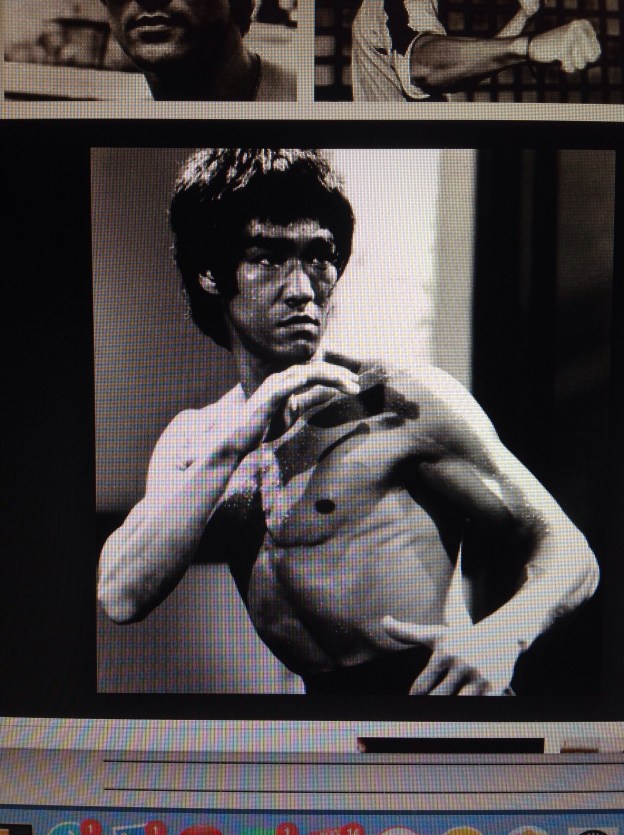
Bruce Lee – a man must constantly exceed his level

This quote was in a pile I sorted out today and I wanted to share it. Lots of learning points on dedication, hard work and pushing past your own self-imposed limits.

‘Bruce had me up to three miles a day, really at a good pace. We’d run three miles in twenty-one or twenty-two minutes. Just under eight minutes a mile… So this morning he said to me “we’re going to do five”. I said, “Bruce, I’m a helluva lot older than you are and I can’t do five.” He said, “when we get to three, we’ll shift gears and it’s only two more and you’ll do it.” I said, “ok, hell, I’ll do it”.

So we get to three, we go into the fourth mile and I’m ok for three or four minutes and then I really begin to give out. I’m tired, my heart is pounding, I can’t go on any more and I say to him, “Bruce, if I run anymore I’m liable to have a heart attack and die.” It made me so mad that I went the full five miles. Afterward, I went to the shower and then I wanted to talk to him about it. I said “why did you do that?” He said “Because you might as well be dead. Seriously, if you always put limits on what you can do, physically or anything else, it’ll spread over into the rest of your life. It’ll spread into your work, into your morality, into your entire being. There are no limits. There are plateaus but you must not stay there, you must go beyond them. If it kills you, it kills you. A man must constantly exceed his level.”‘

(It comes from Bruce’s great friend and co-writer John Little and can be found in ‘The Art of Expressing the Human Body’.)

4 time management tips to implement into your daily life

time management pic

The internet is choc-a-bloc full of tips on time management but the key to getting the best results is to find solutions that work for you. My list below is based upon the ones that I use and recommend to my clients and friends who need some help in this area and they are simple but very, very effective.

Have a read, try them out and if they work for you, stick with them – they will be the foundations upon which you deliver everything in your life, important or otherwise.

If you need help with what you do, consider taking a time management course. It’s one of the quickest and easiest ways to learn how be more productive and stay in control of your working day and some training providers, like Activia, will even help you build a personal action plan at the end of your course.

Use lists but keep them manageable:

Lots of us like lists but they can get out of control. At one time last year I caught myself with five different lists – three on separate sheets of paper and two in separate notebooks. Totally not cool.

There is also a big problem with having a list that’s so long that you never actually come to the end of it. This can be psychologically very damaging and leave you feeling like your list owns you. Again, not at all cool.

I use one long master list that contains my ongoing to-do items and then break this one down into smaller lists – one for the morning that I have to finish before I eat and another fresh one for the afternoon that is again full of tasks that must be done by the end of the day. This way, the smaller lists are way more manageable and don’t leave me with cold sweats at the size of the number of outstanding things I have to get done.

Generally a much better way to avoid panicking and leaves my mind much clearer and focussed on the tasks at hand.

Use an online calendar and set reminders:

If you’re not using your phone, even if it’s not a smartphone, to send you reminders and keep you on time for everything that’s going on in your life, you’re really missing a trick. And if you have a smartphone and are not using the calendar app that comes with all of them, work out how to use it and watch it change your life.

They are very simple to set up and you can also see the calendars of family, friends and co-workers if they give you permission so there are no excuses for missing those appointments.

You can also set alarms and reminders that will give you a heads-up at a variety of time intervals before the appointment is due and these can be in the form of an email or a special tone so that you don’t miss it. Add in colour-coding, public holidays and all of your friend’s birthday details from other apps like Facebook and you can see why they are a must-have.

Use a countdown timer:

A really good method that I learned a couple of years ago was to stick to the chucks of time you have allocated by using a countdown timer.

Mine is in the picture above and is extremely loud when it runs out of time – enough to be heard whatever I’m doing, however loud my music might be blaring out or if I’m wearing headphones, for example.

It is super-easy to drift off and forget how long you are spending on a task, especially if it’s one you really enjoy. It can also be very, very easy to watch an hour or more of your life disappear while catching up on your social media channels, so set yourself a time limit and use a timer to make sure you stick to it.

Automate or delegate wherever you can:

These options are also worth considering and are especially relevant if you charge for your services by the hour.

If you can earn more money by working for one hour than it costs for you to pay someone to do a task such as your cleaning or basic bookkeeping, for example, it makes sense to use their services.

It’s also very easy to automate regular payments and this is something that many people simply overlook. What about using tools such as MailChimp for sending email to your contacts or using online tools like Buffer or HootSuite to send your posts on Twitter and Facebook at the times you select?

Think laterally and you will find there are lots of ways to take the automation route.

Ian Mountford is a Strategy Coach providing motivation and guidance to entrepreneurs, wannabe or fully-fledged. He draws from his own experience of building businesses from the ground up and spending many years helping clients to consistently achieve their goals and aspirations. Ian works with clients face-to-face and internationally.


A great week and the learnings from it

johnny-chung-lee-high-speed-bottle-smash-3

It’s been a great week as Katherine and I started our new company, St John, and it has been shaped by some key points that I wanted to pass on here:

Ideas have been developed into products and discussed with potential clients. No real time for incubation or doubt to creep in, but straight out there and tested in the real world.

Hard work – focus and drive towards a common goal.

Teamwork and passion for the product and why it will be a success.

Self belief – there will always be doubters but they are not the ones in control and are normally the ones who are frightened that your success will show up their weaknesses. Get it done and deal with the consequences, good or bad.

Thankfulness – for the abilities we have as a team, for the opportunity to make new things happen, for our health and strength and all the things that make us who we are. They all need to be appreciated and we all should be thankful for them.

Enjoy your weekend! I know we will.

Ian Mountford is a Strategy Coach providing motivation and guidance to entrepreneurs, wannabe or fully-fledged. He draws from his own experience of building businesses from the ground up and spending many years helping clients to consistently achieve their goals and aspirations. Ian works with clients face-to-face and internationally.

 

How do you respond to discomfort and hardship?

Cliff-camping-read_1906690i

Discomfort and hardship are a state of mind in the society we live in today. We generally lead very protected lives in the western world – comfortable, secure and with a full stomach most of the time – and don’t have much of a sense of what going without things is really like. There are many in the world that do suffer from extremes of poverty and very poor living conditions, lacking basics of food and shelter, but this is not about them. This is about people who get angry and annoyed if their wifi isn’t 100% efficient or complain at the length of the queue in their favourite coffee shop.

How you respond to any discomfort or hardship in your life can be definitive as you develop. If you learn your craft, whatever that might be, in a tough school, the chances are you’re going to have paid attention and worked hard to master whatever the craft you were learning as the consequences of not doing so would be unbearable. The best examples of this tend to be the armed forces colleges around the world producing elite fighters but there are also examples in all areas, such as musicians, businessmen and women and engineers and so on. The overriding factor is that high percentages of these people at the top of their game had to overcome some obstacles that would have put off many people much earlier in the learning process and it was this ability to overcome challenges, whether physical, mental or both, that got them to the top.

When there were no cars and public transport was minimal and inconsistent at best, people thought nothing of walking for miles and miles to do everyday things. And in the years before this, people ate what they killed and if they didn’t kill, they didn’t eat. I heard a story about someone the other day who sleeps outdoors at least one night a month to ensure they don’t lose their ability to handle cold weather. The mental fortitude that this kind of thing breeds has a habit of spreading into other areas of your life and I would recommend thinking about your own life and looking for ways to encourage some discomfort or hardship and see what gains you can achieve as a result.

Ian Mountford is a Strategy Coach providing motivation and guidance to entrepreneurs, wannabe or fully-fledged. He draws from his own experience of building businesses from the ground up and spending many years helping clients to consistently achieve their goals and aspirations. Ian works with clients face-to-face and internationally.

Keep it simple

I was looking at few of my old notes for a bit of writing inspiration and I found some very good stuff on keeping it simple:

Head in Hands

  • Talk less, think more
  • Learn to say ‘no’ and mean it
  • Buy what we want, instead of what others say we want
  • Live in a way that is self-determined and original
  • Fulfil the demands of work without being controlled by it
  • Recognise there are many things more important than money
  • Know what you want
  • Not cost, but value
  • Buy one, chuck one
  • Avoid debt and the stress of overspending

I bought a very short book on this subject when I was a lot younger and it has since been lost or misplaced in various house moves, but that book was where some of this stuff came from and it was a really important thing for me. Following a few of these basic rules has helped me to keep my life relatively uncluttered and allowed me to sleep well at night when things have been tough.

In the world we live in today, the pressure to conform and live up to other people’s standards can be an expensive and tiresome task but still so many of us make the effort when it really isn’t required. Vanity has become of greater importance than sanity for many and this trend isn’t going to help to develop the great leaders and philanthropists of the future. Keep it simple and your chances of living a life that is full and authentic will be much greater.

Ian Mountford is a Strategy Coach providing motivation and guidance to entrepreneurs, wannabe or fully-fledged. He draws from his own experience of building businesses from the ground up and spending many years helping clients to consistently achieve their goals and aspirations. Ian works with clients face-to-face and internationally.

Sunday nights

I usually feel good on a Sunday night. Another week is ahead of us, bringing more of the challenges and opportunities that keep us moving forwards.

For many, Sunday night is not the best time. It can be filled with dread.

Sunday night brings everything that you walked away from on Friday back to the front of your brain.

The effects of this can be harmful – lack of sleep, more arguments with your partner than normal, frustration at the situation you feel you are in, etc.

Some changes to the way you see your situation can help you to see things a little differently. If you’ve got a job, that’s a positive straight out of the gate.

Get to bed and turn that screen off, but before that, make a plan for the week ahead so you know what’s coming, what you’re committed to.

Say a prayer to whoever’s watching over us, guiding the steps we take, whoever you believe it is up (or down) there.

And get some rest. Everything’s better with a good night’s sleep.

Get up, rested, and get to work.

It’s what we all have to do. Why should you be any different?